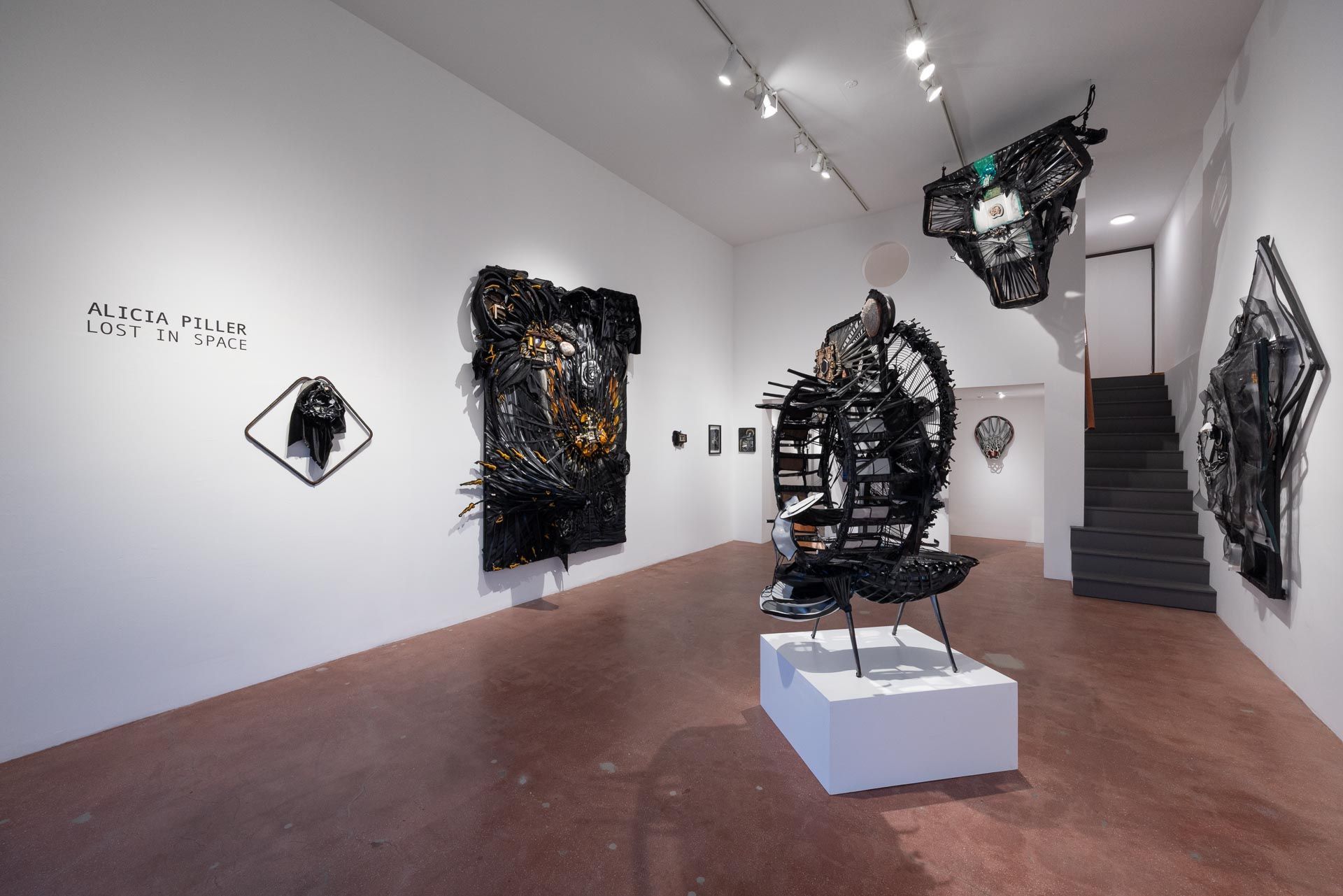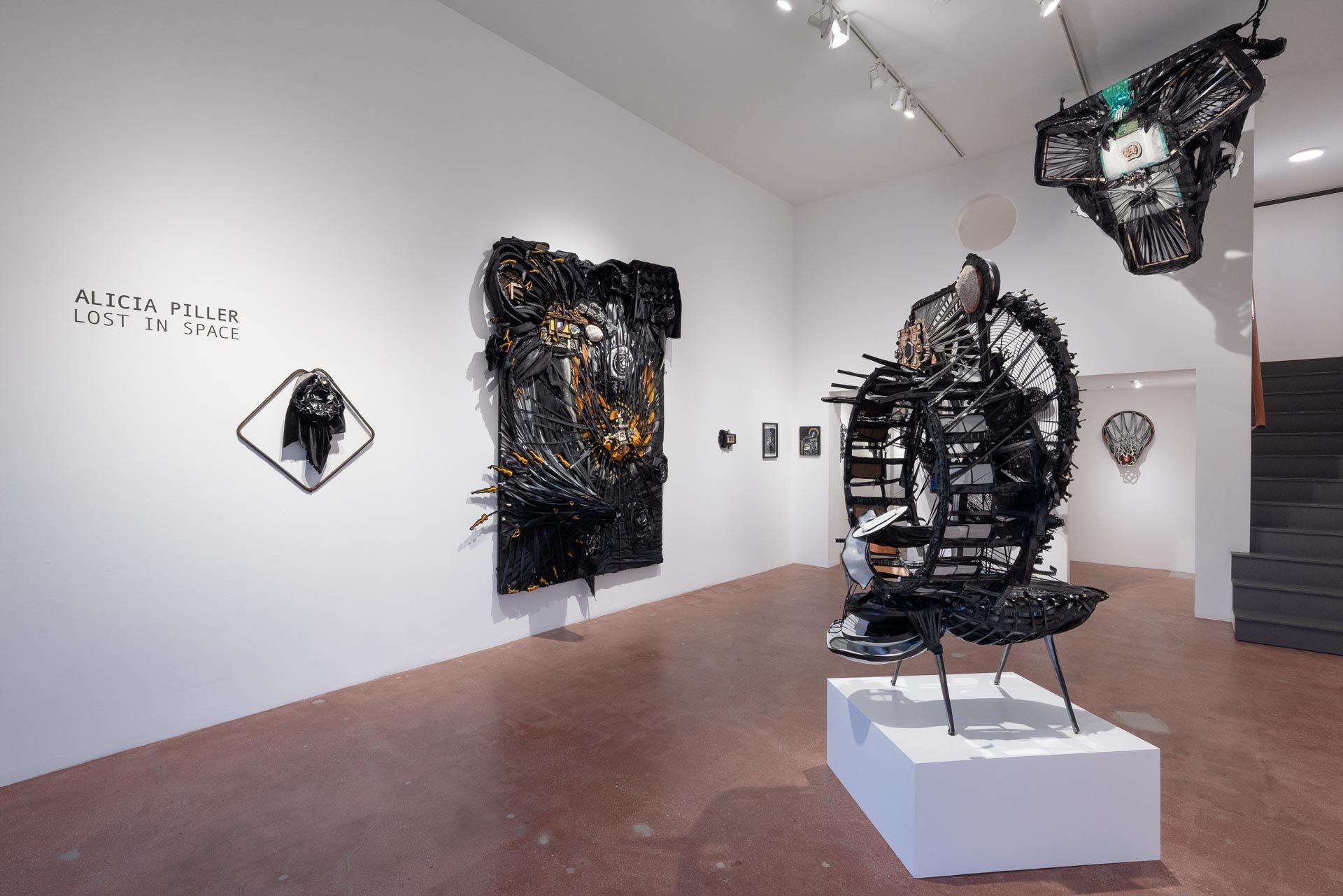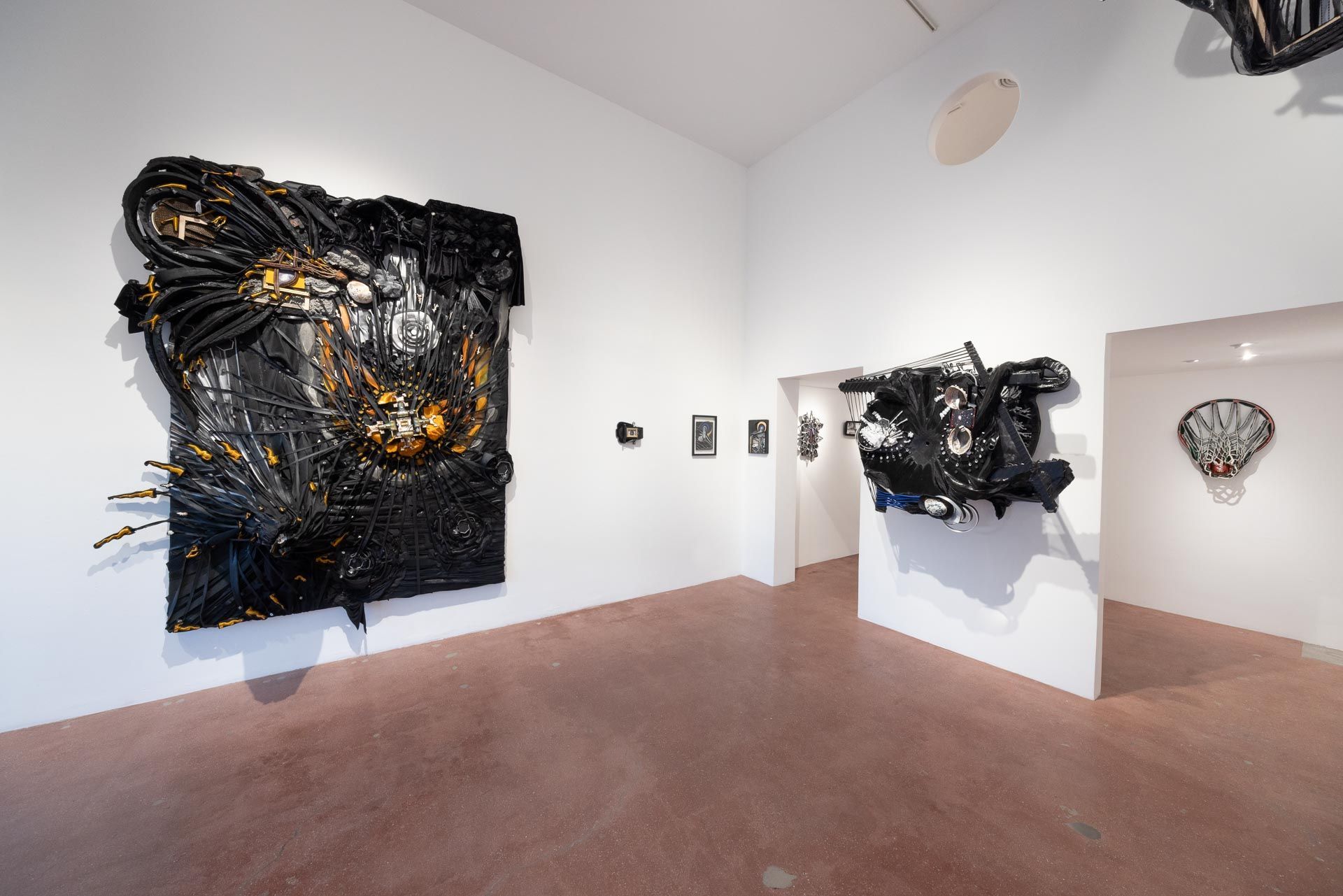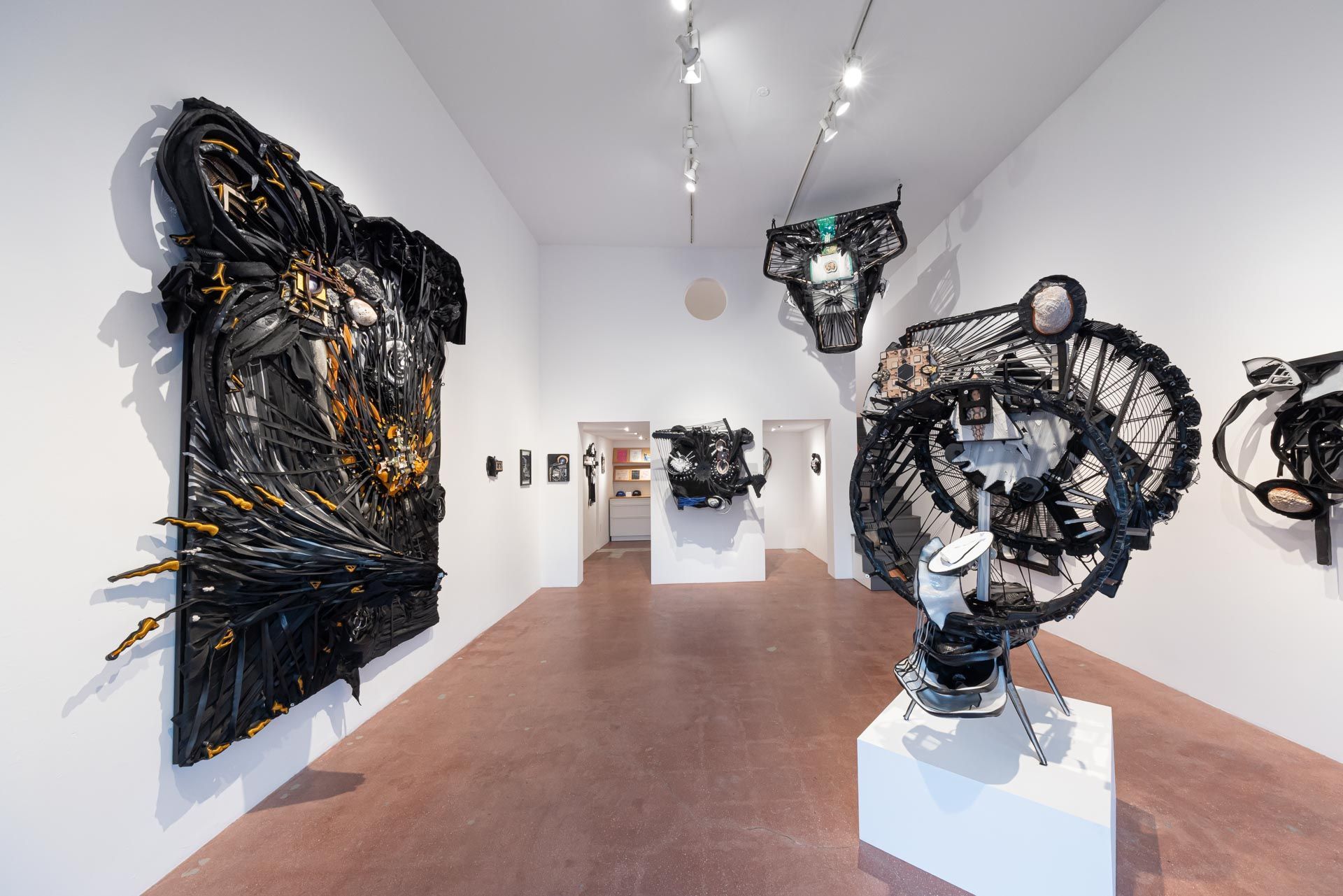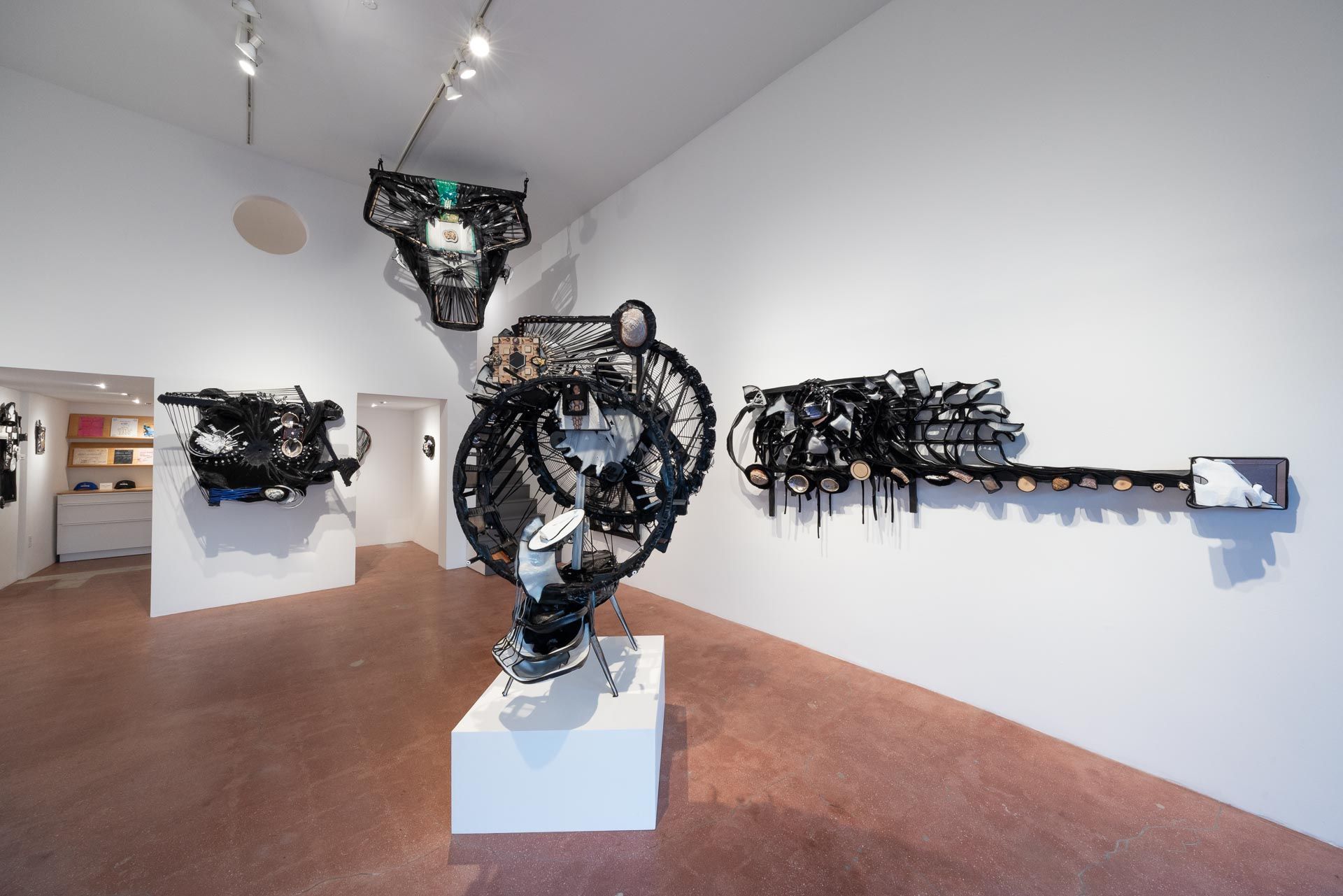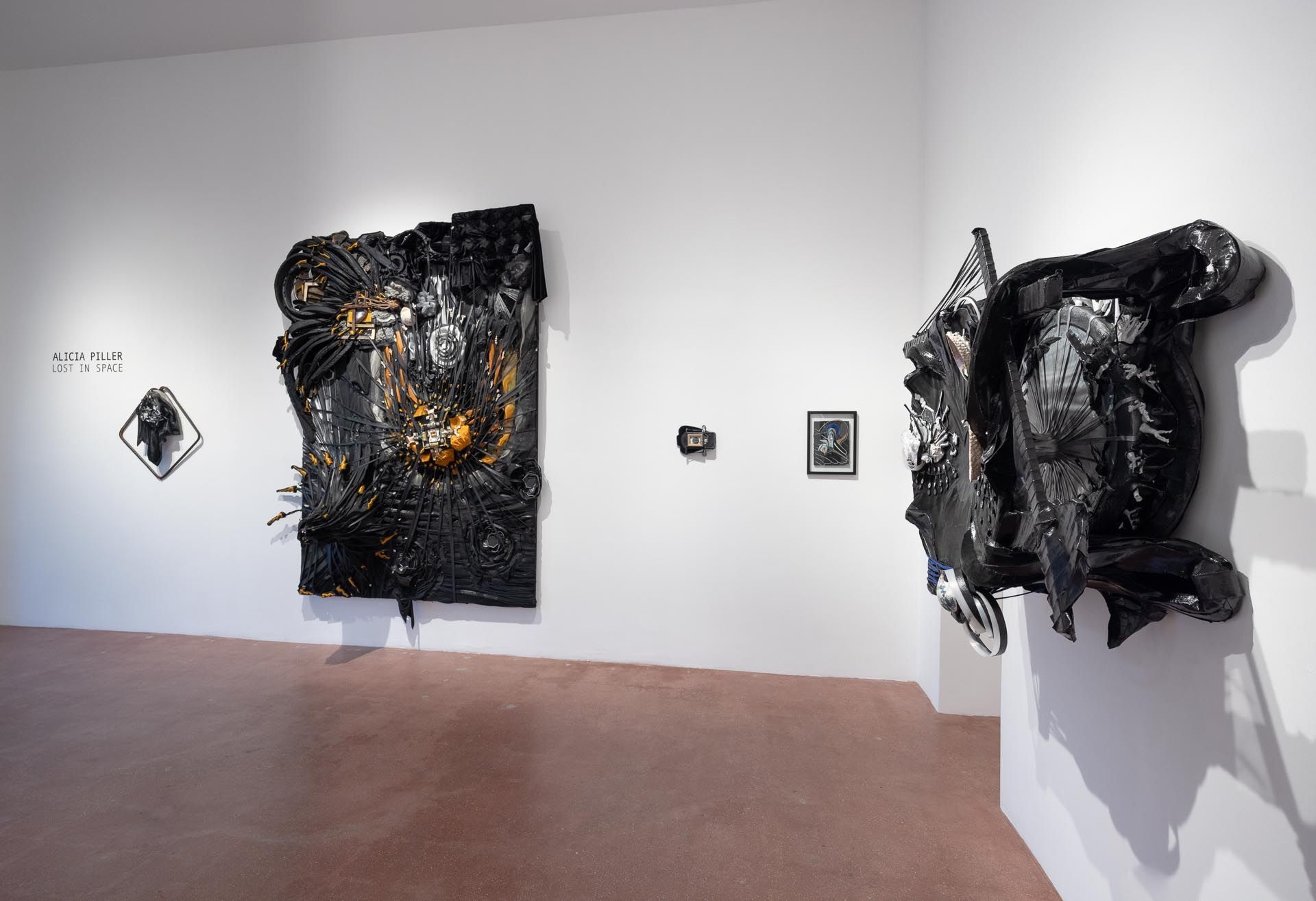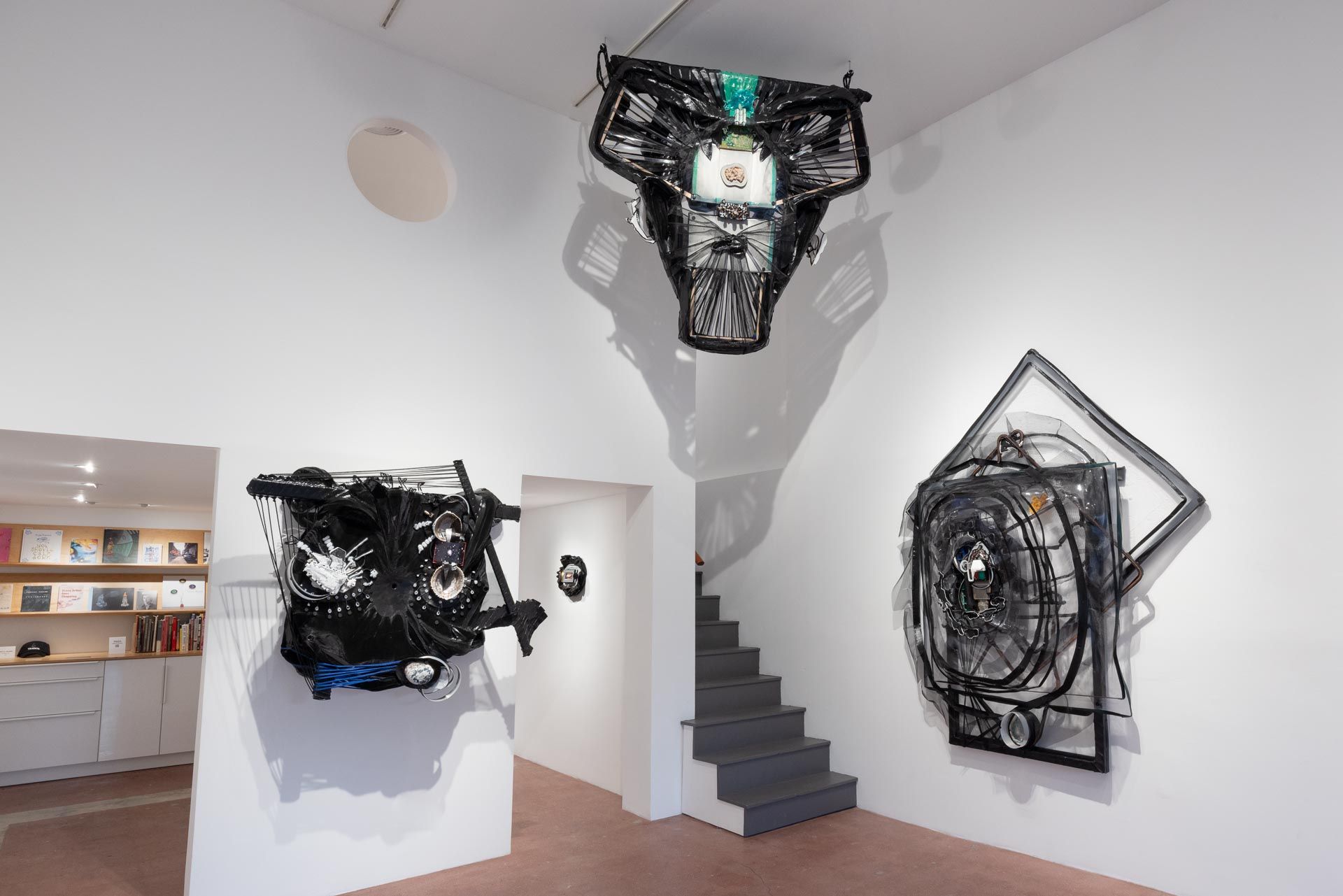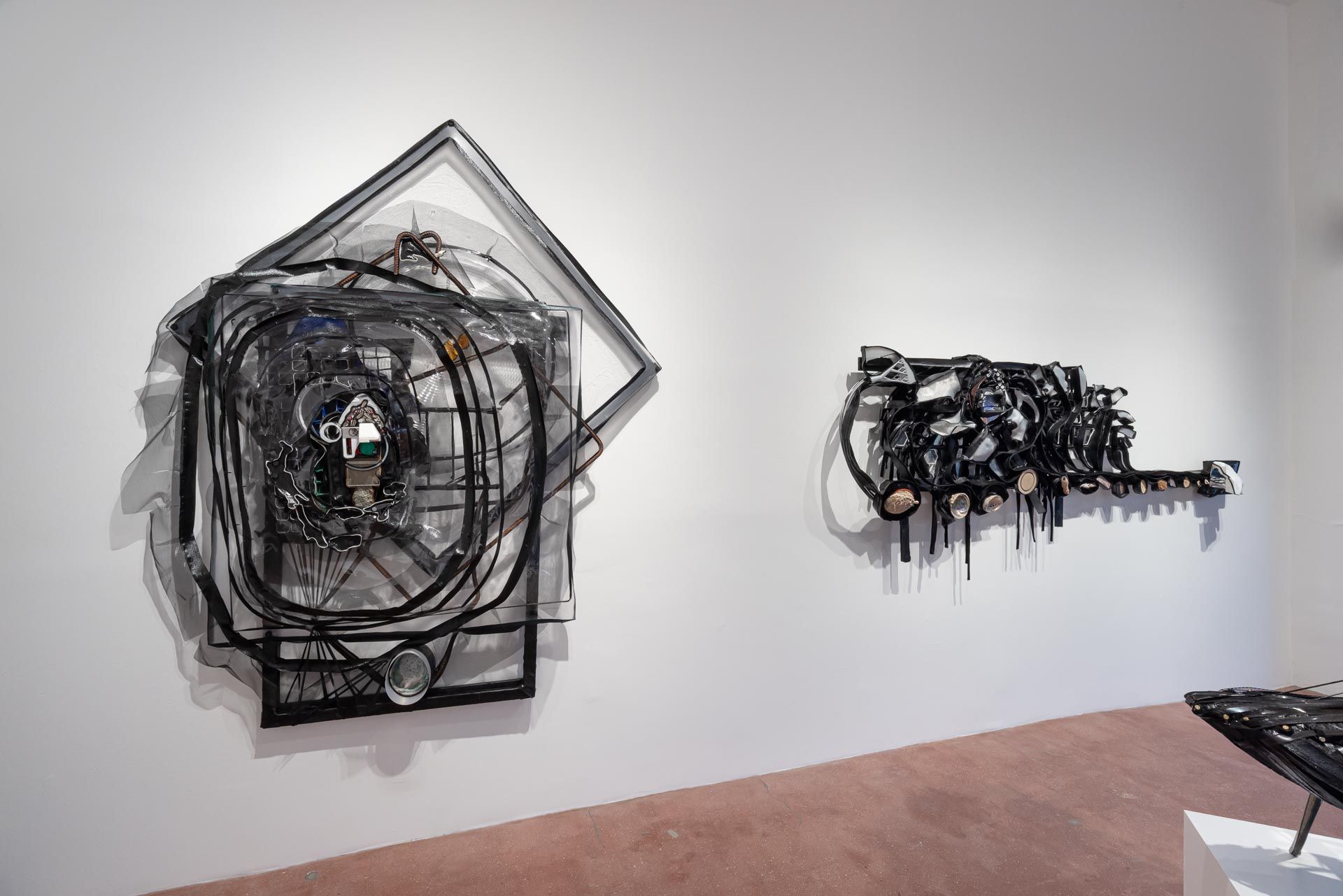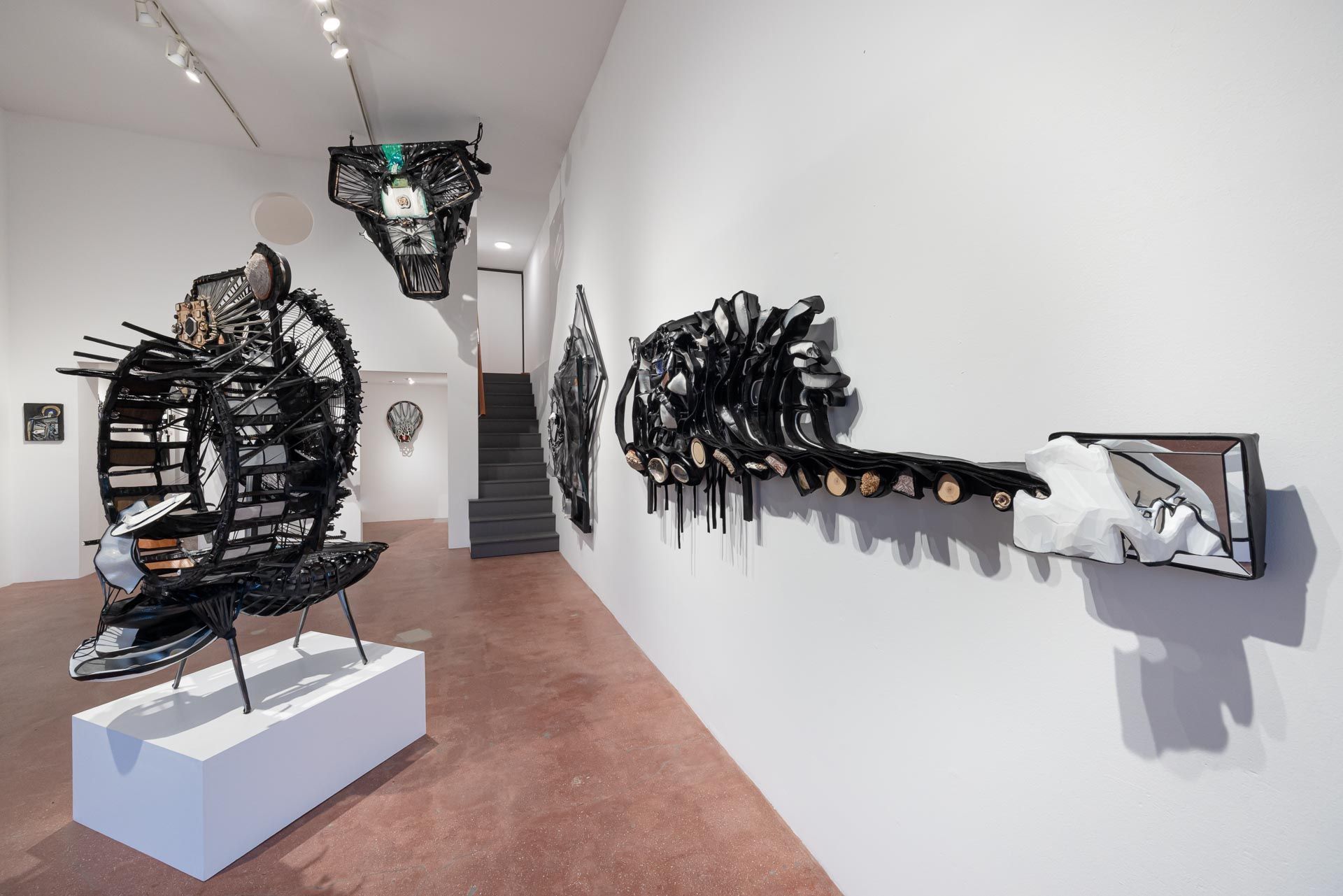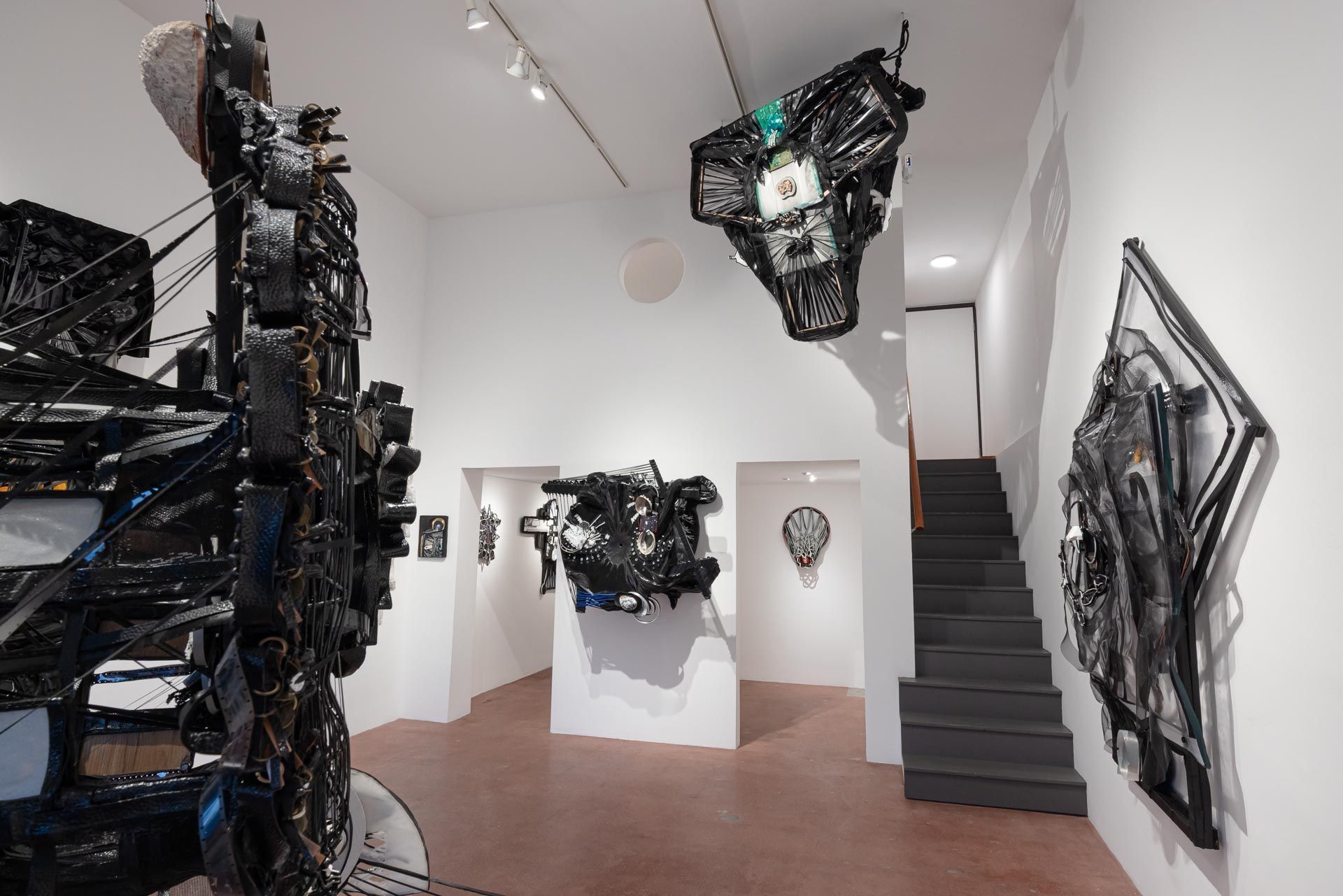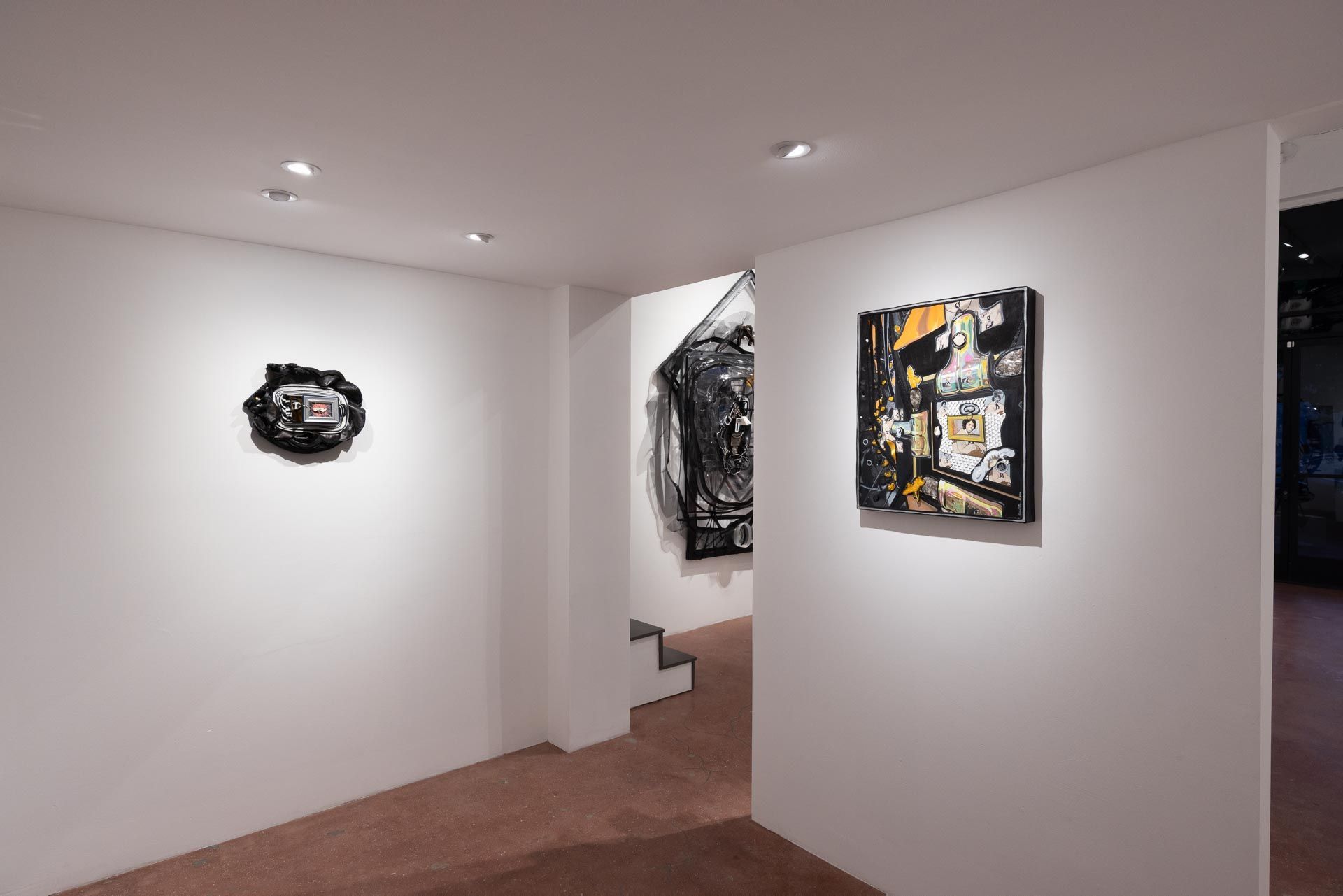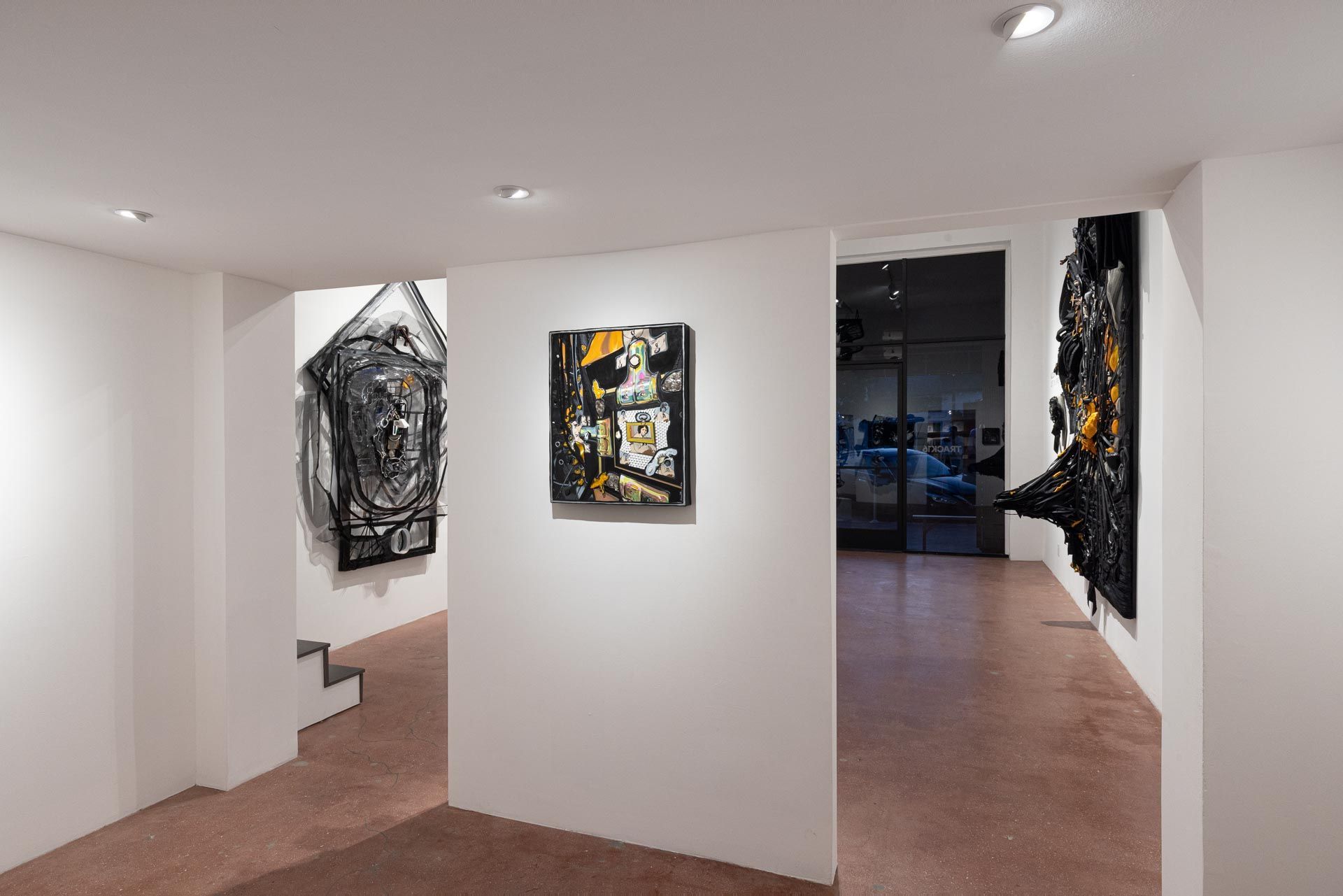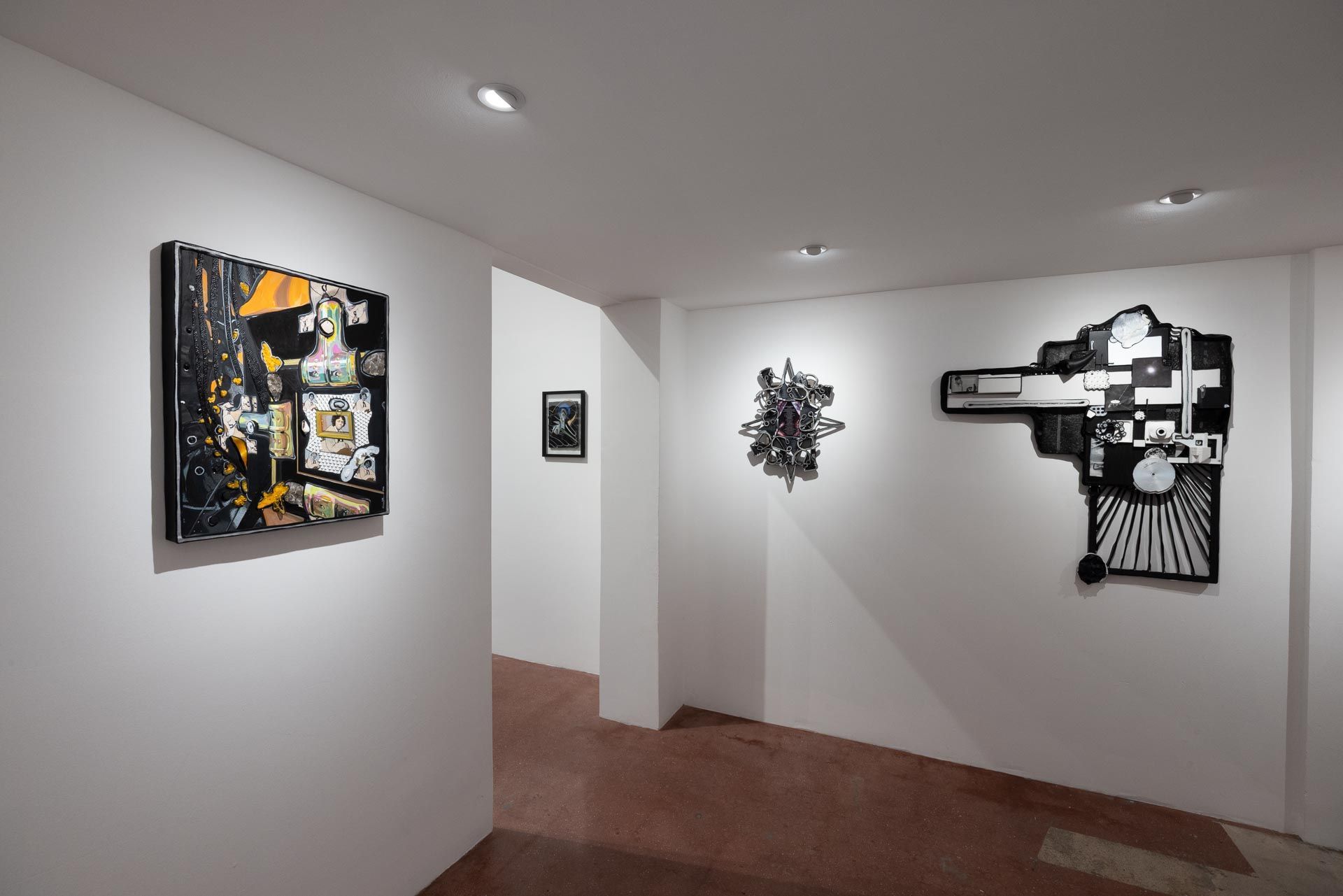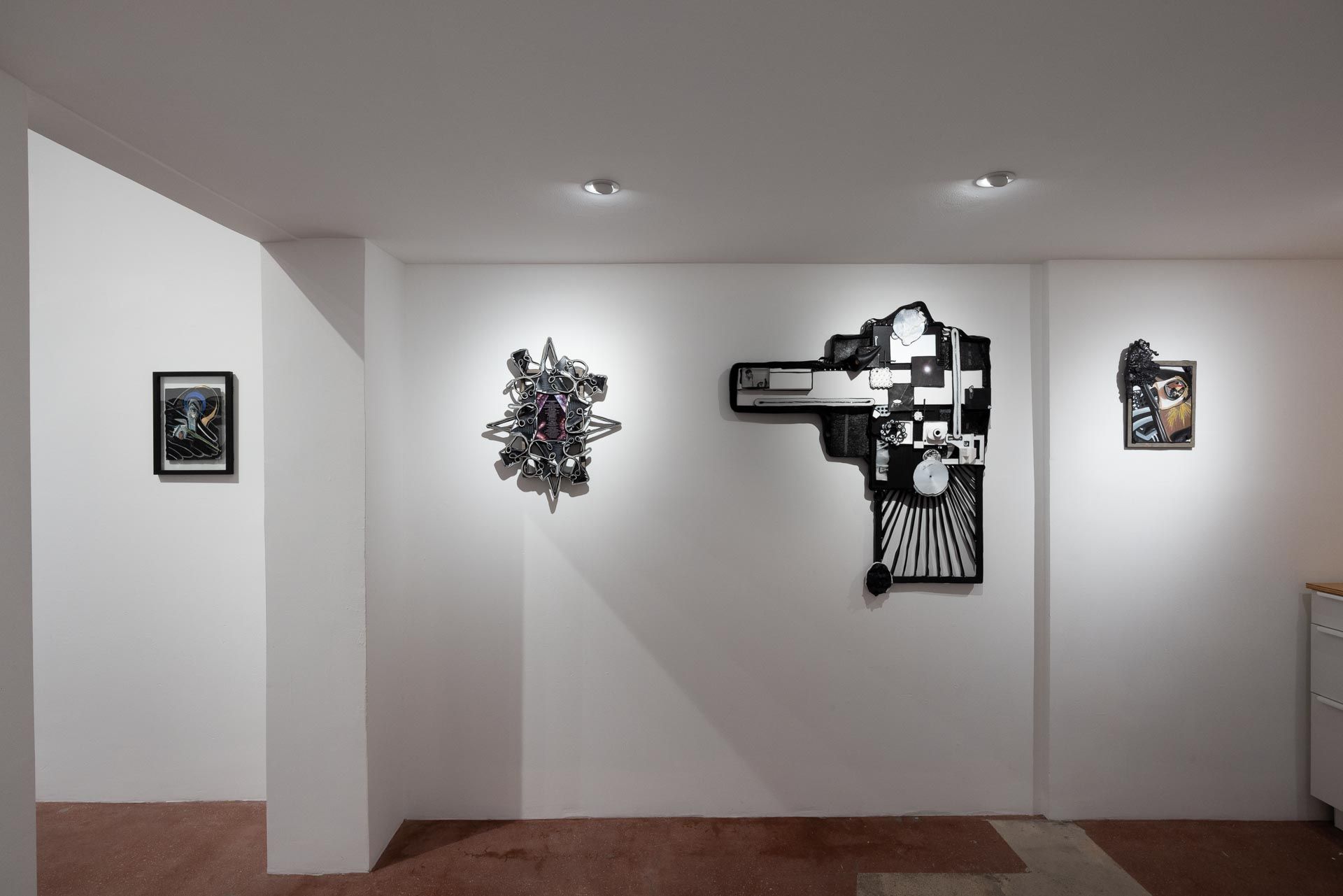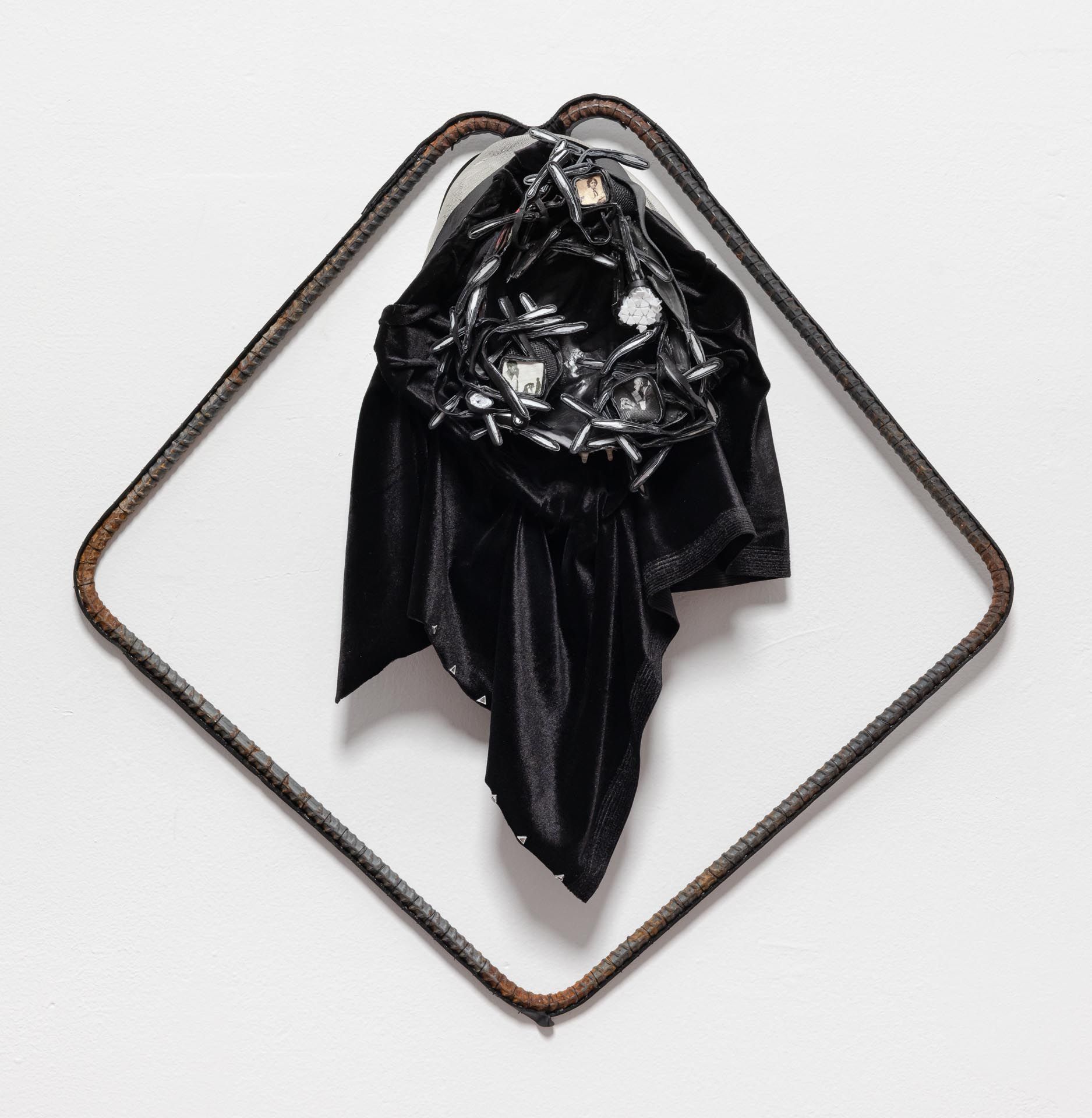
Stars Beneath Their Skin
Rebar, Recycled leather, Velvet, Vinyl, Photo on canvas, (Augusta Savage, Edmonia Lewis and George Washington Carver) 3-D print parts, Thread, Resin, Screen, Metal, Mesh, Acrylic paint.
MORE INFO
28 x 28 x 5.5 inches
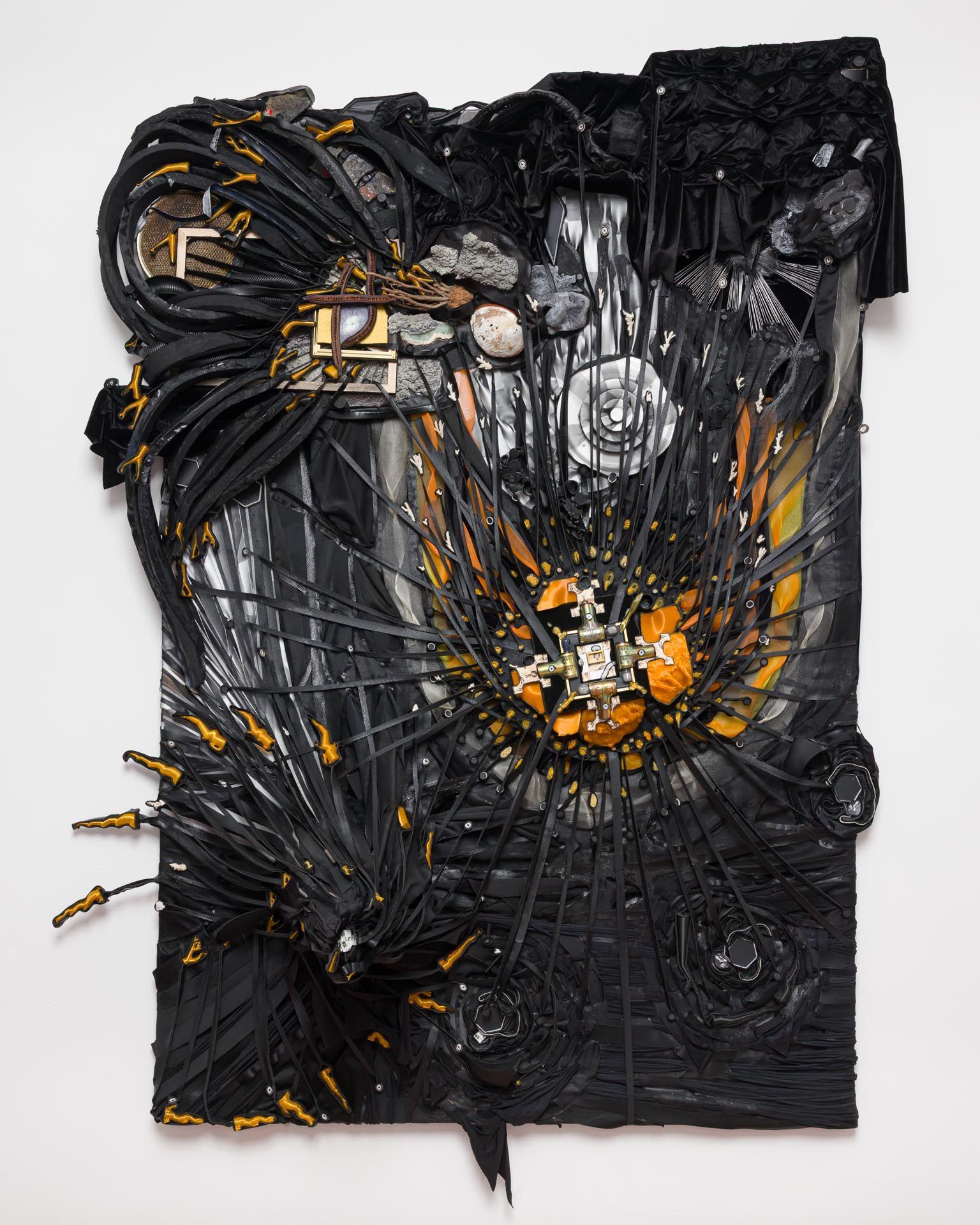
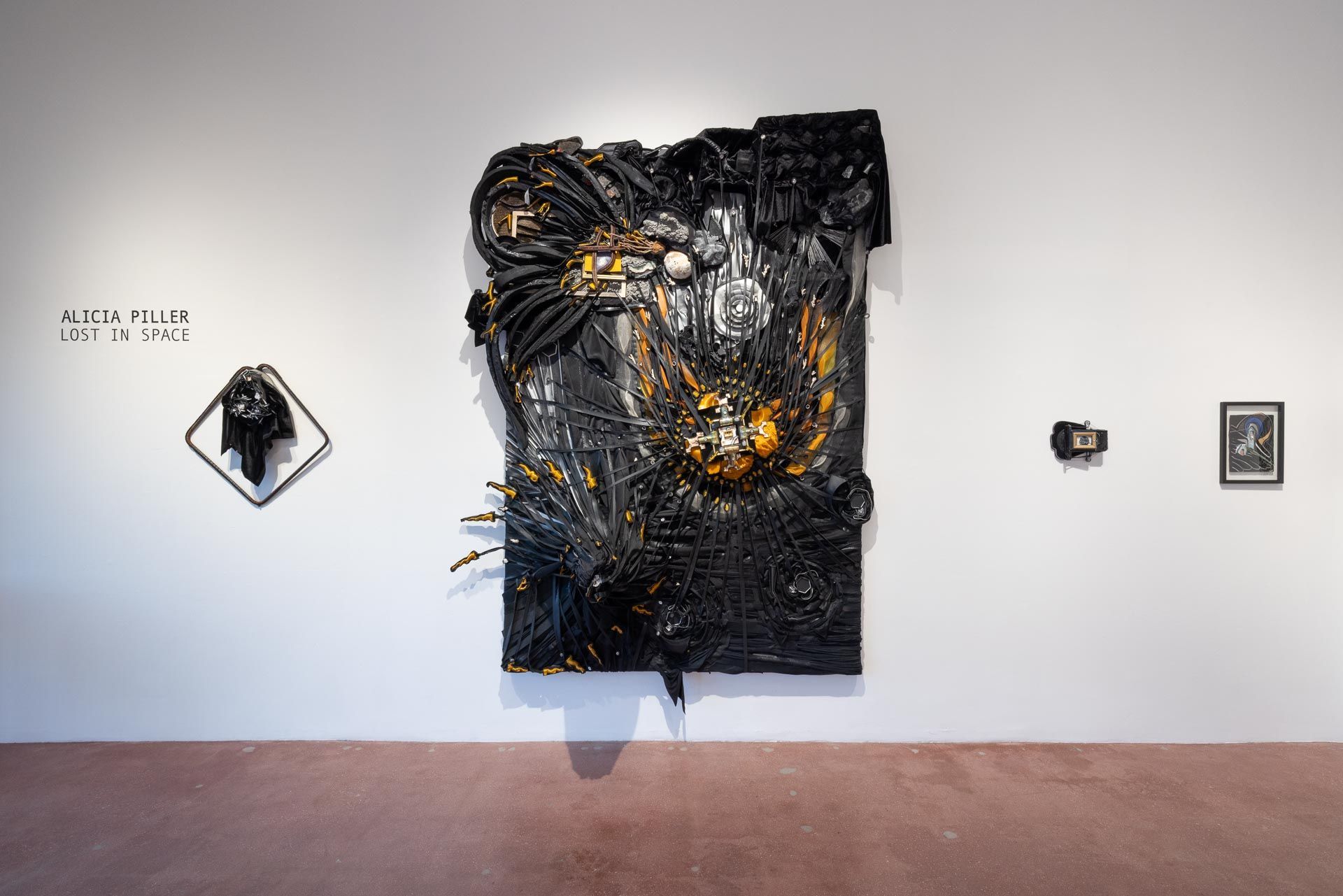
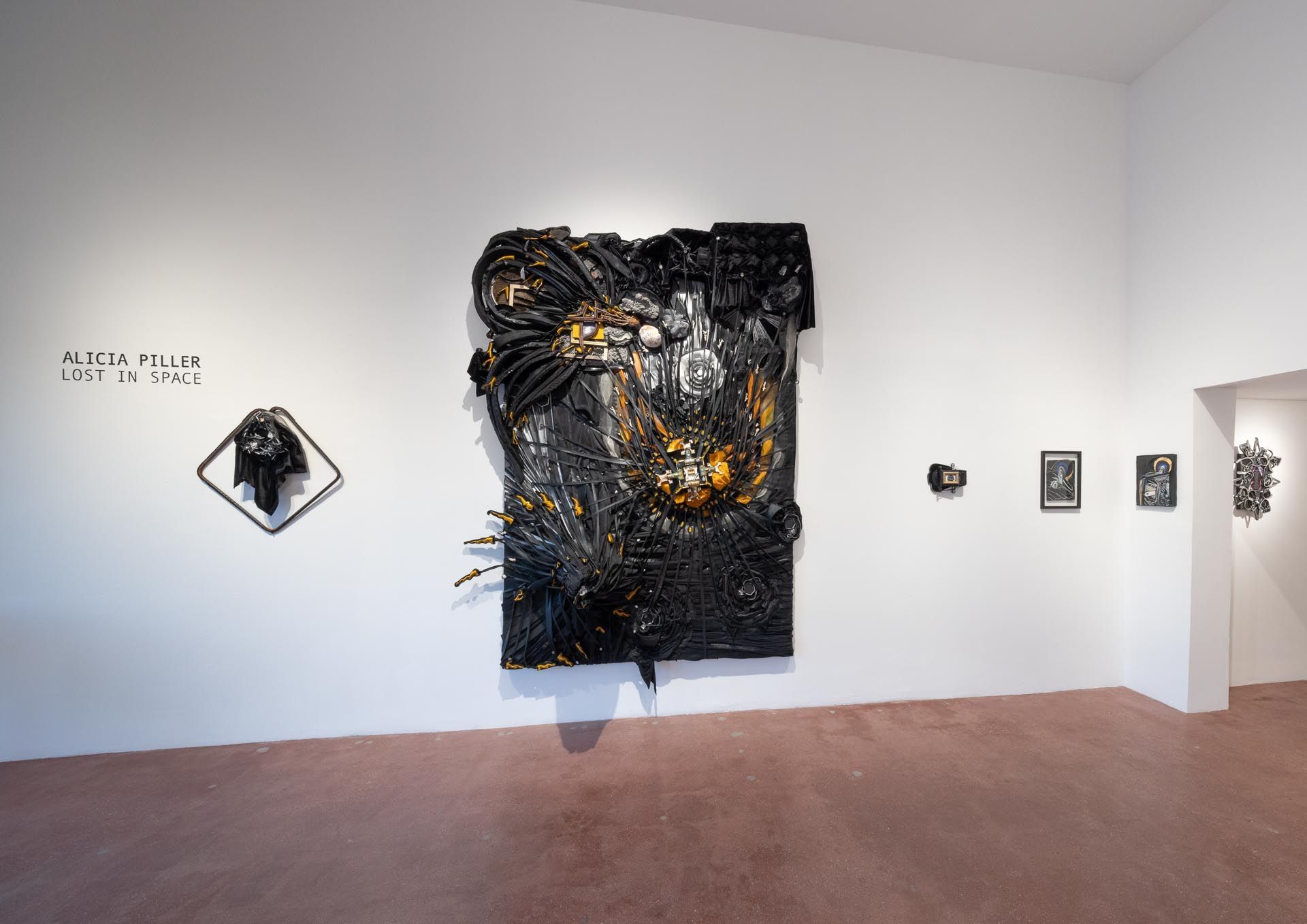
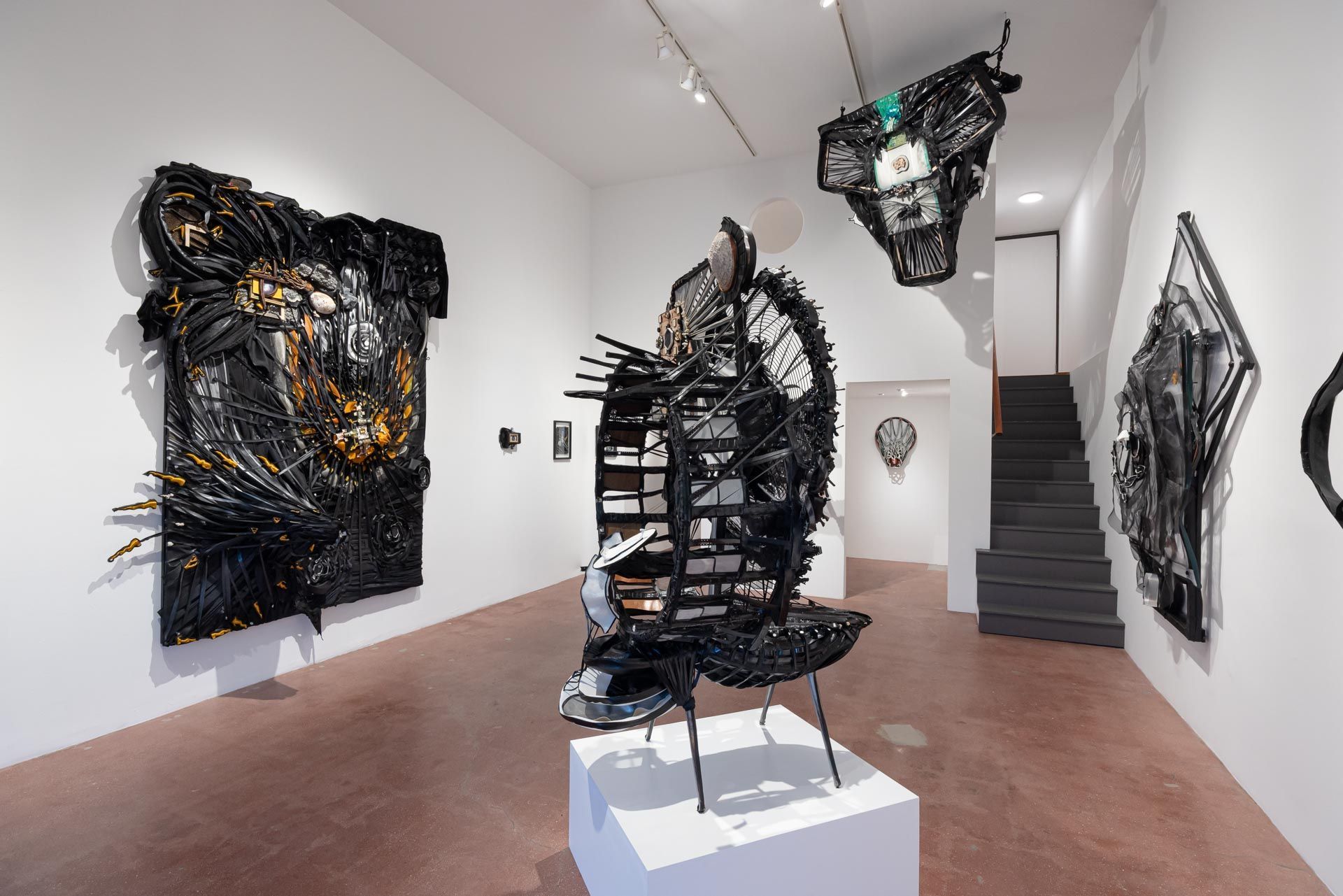
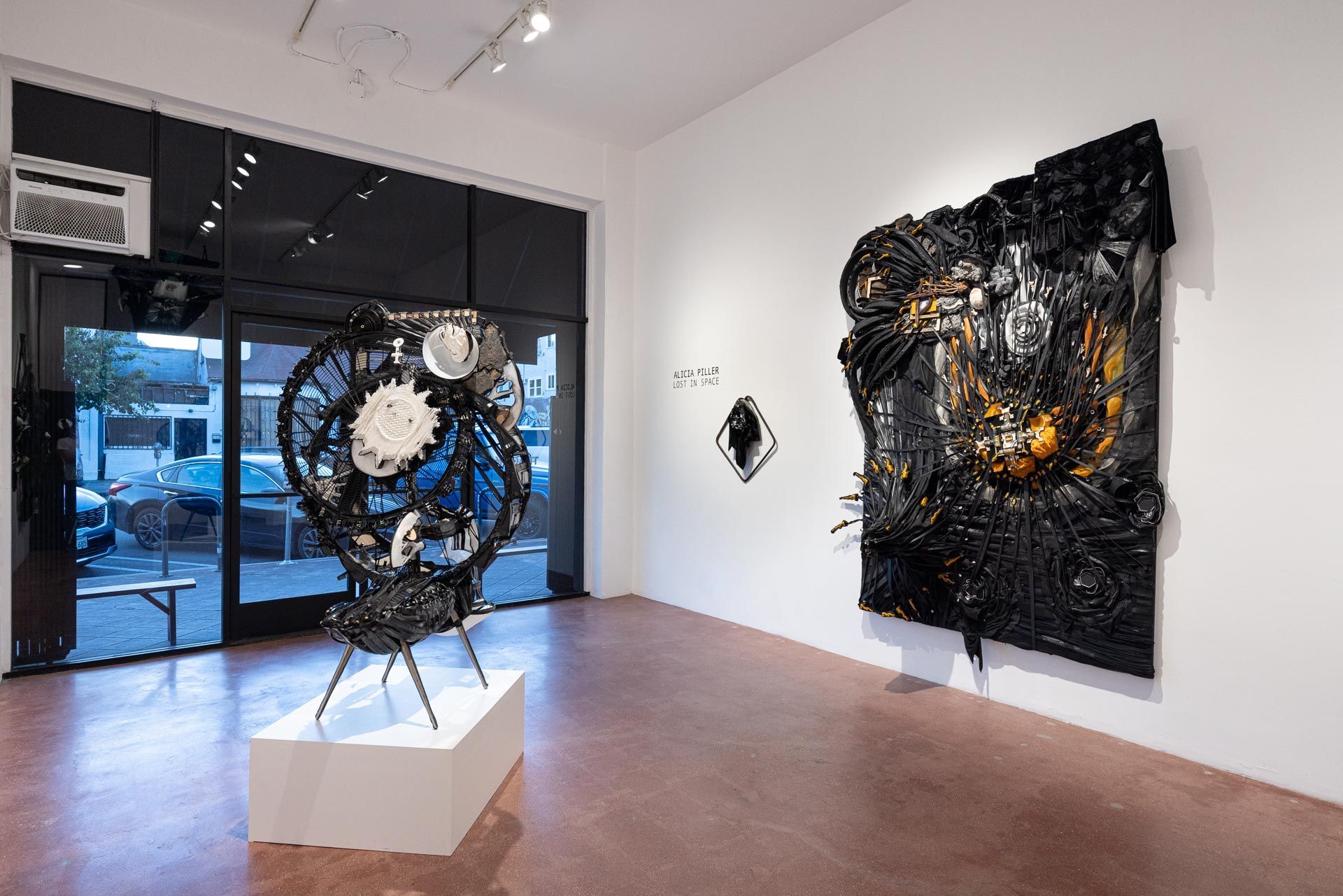
Celestial Monument. Eternal Frequency
Vinyl, Recycled leather, Photo on canvas, (Augusta Savage, Edmonia Lewis and George Washington Carver) Window screen, Recycled 3-D printed parts, Wood, Metal, Acrylic paint, Resin, abalone shell, Tile, Fabric, Paper, Recycled paint, Lightbulbs, Palm root, Seed pod, Foam coral./
MORE INFO
106 x 80 x 29 inches
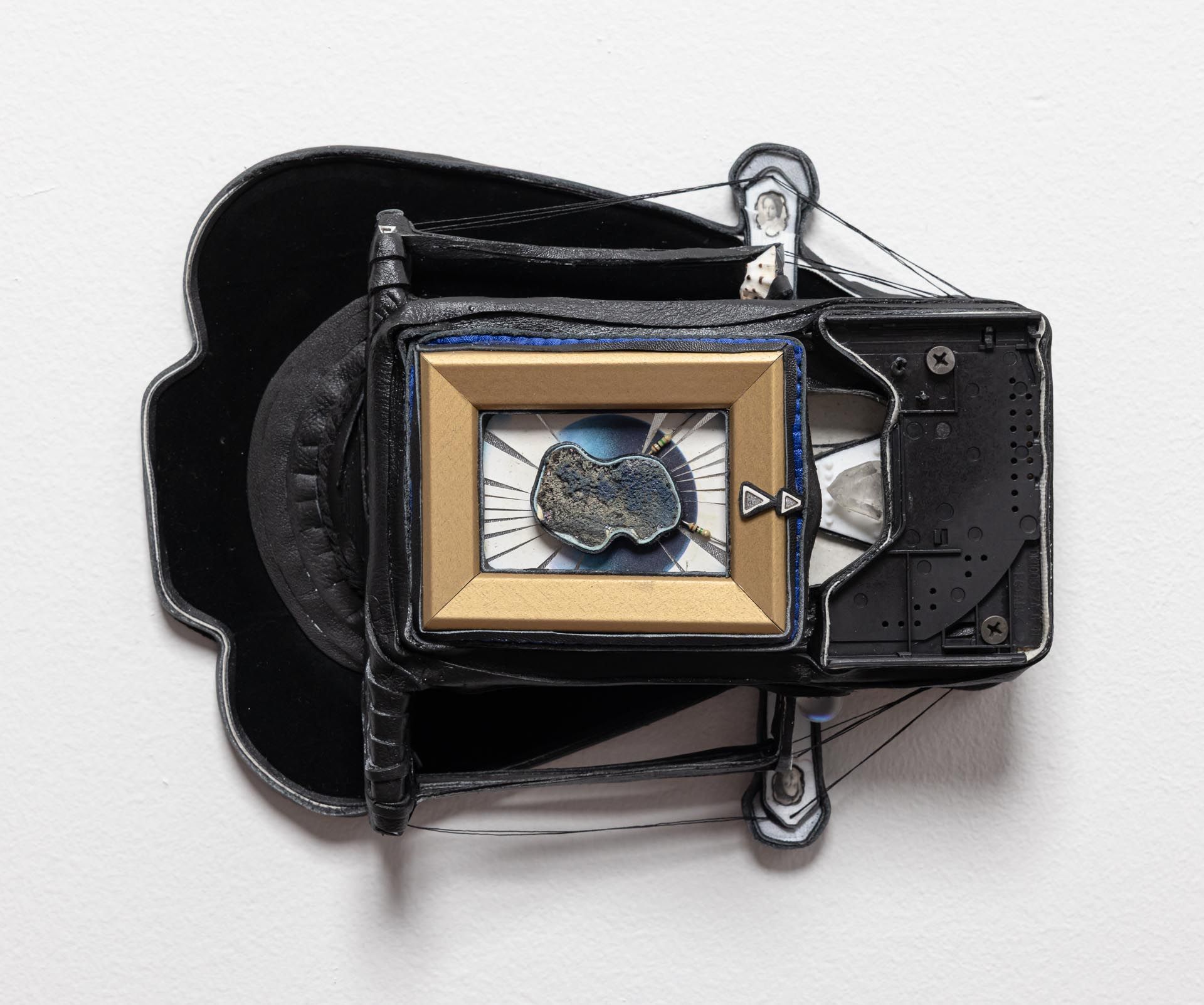
Ancestral Frequencies. Infinite Orbit
Recycle leather, Vinyl, Crystal, Plastic, Thread, Metal, Acrylic paint, Shell, 3-D printed parts, Quartz crystal, Electrical parts, Velvet, Photo (Maternal great grandmother)
MORE INFO
7.5 x 10.5 x 2.75 inches
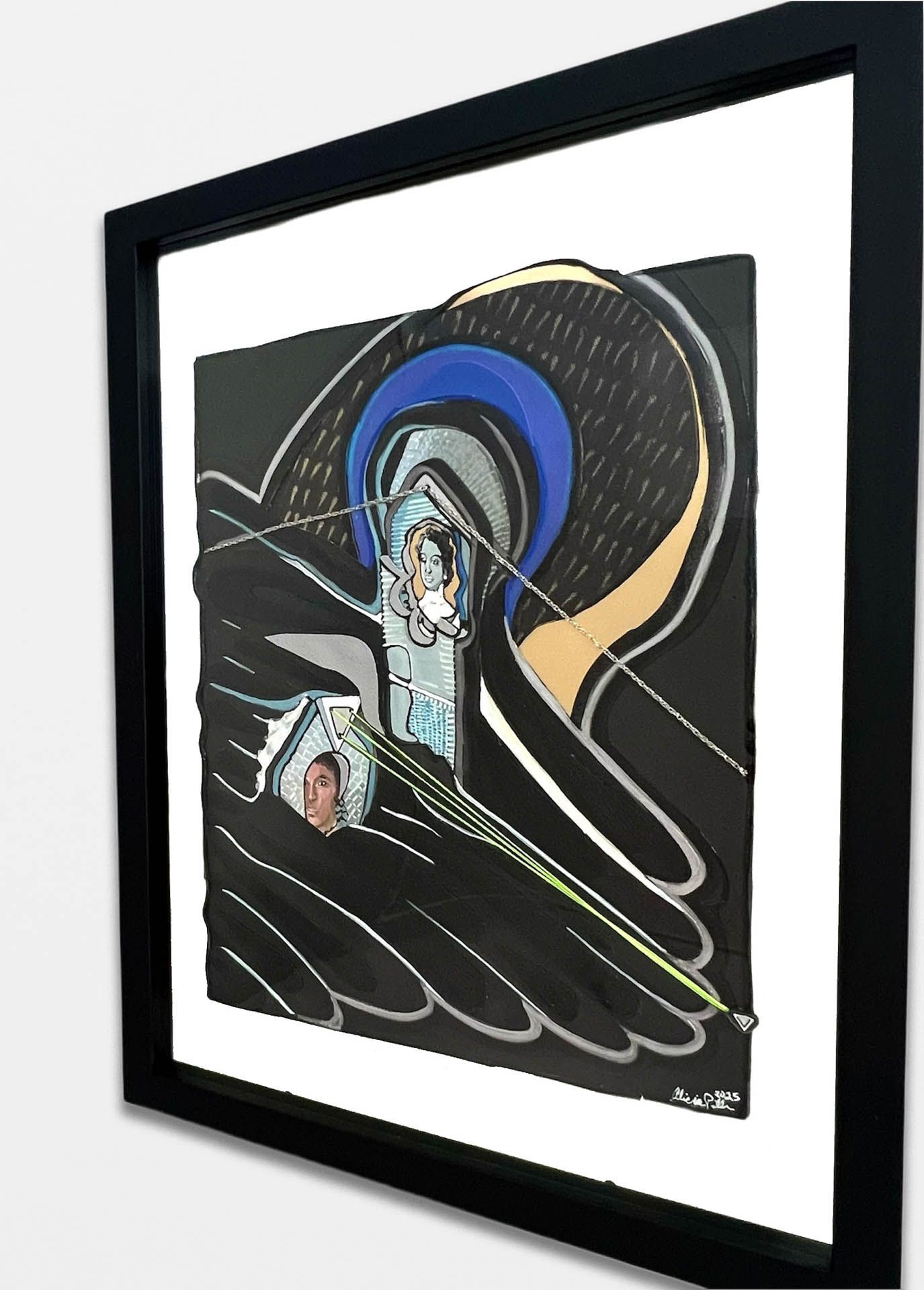
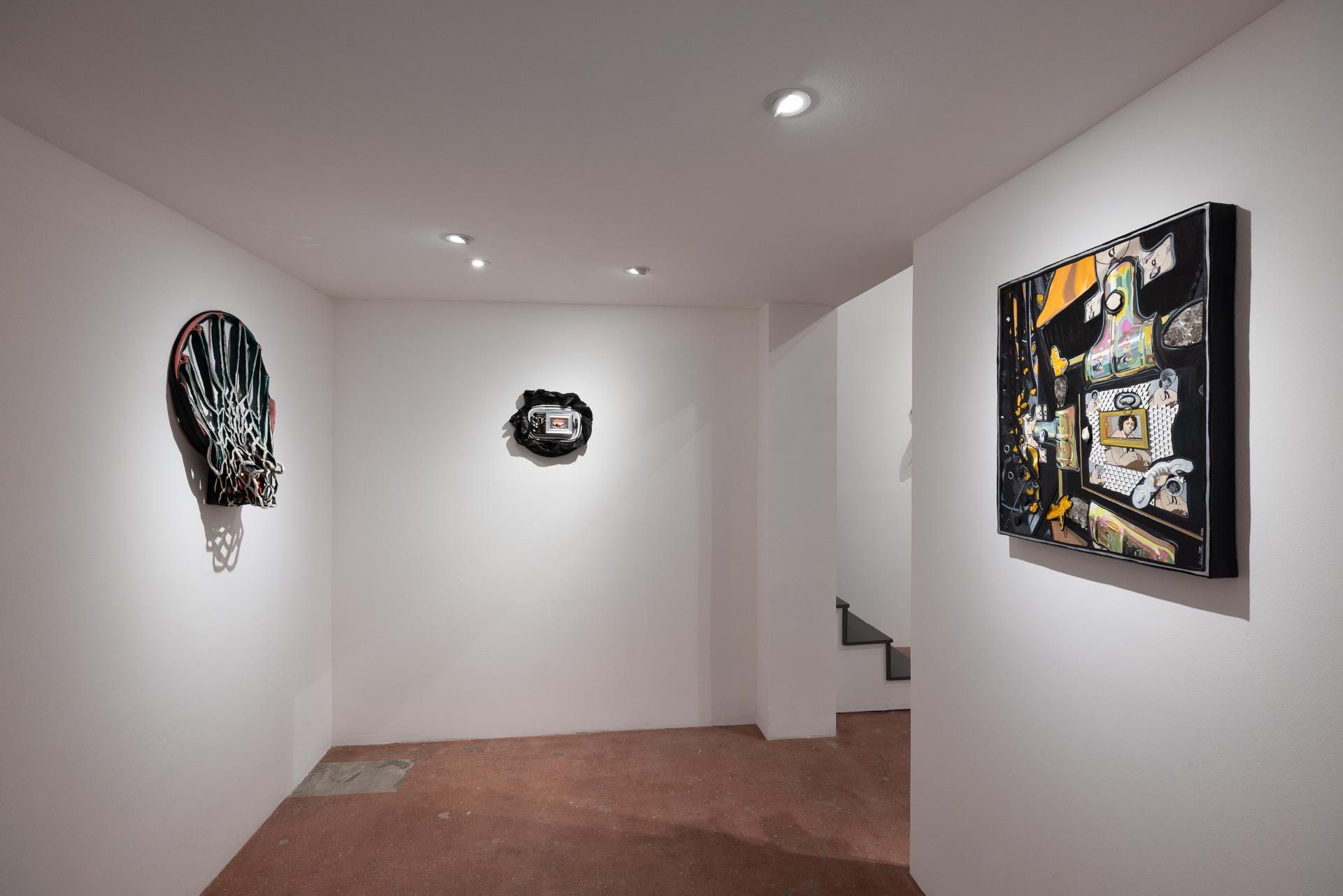
Ancestral Frequencies. I (2D Detail of Ancestral Frequencies. Infinite Orbit)
Tar paper, Recycled leather, Thread, Chain, Screen pint on paper, Acrylic paint, Glass, Wood 3-D printed parts, Film strips.
MORE INFO
11.5 x 8.5 inches
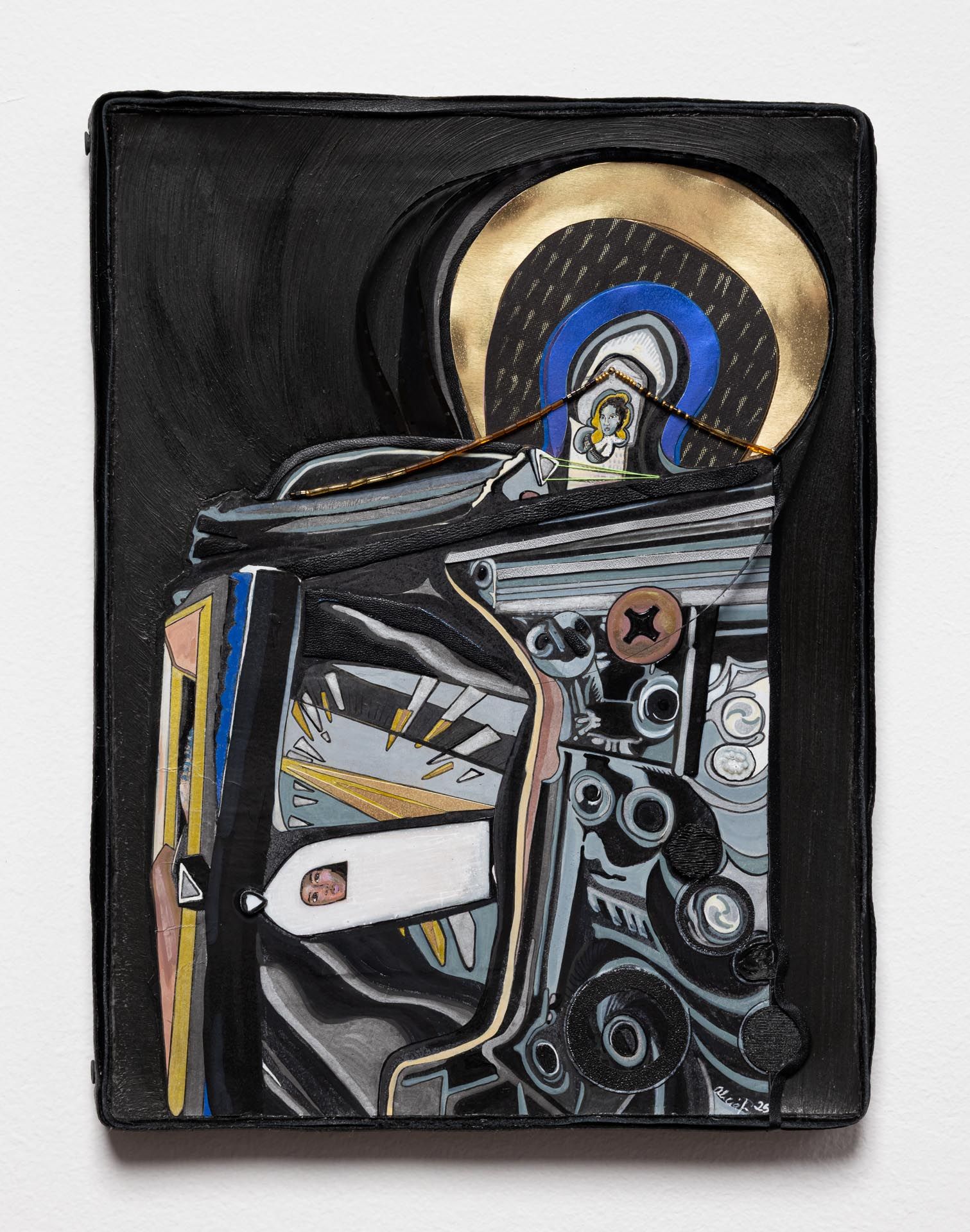
Ancestral Frequencies. II (2D Detail of Ancestral Frequencies. Infinite Orbit)
Recycled leather, Acrylic paint, Wood, Tile, Resin, Foil paper.
MORE INFO
13.5 x 10.5 x .75 inches
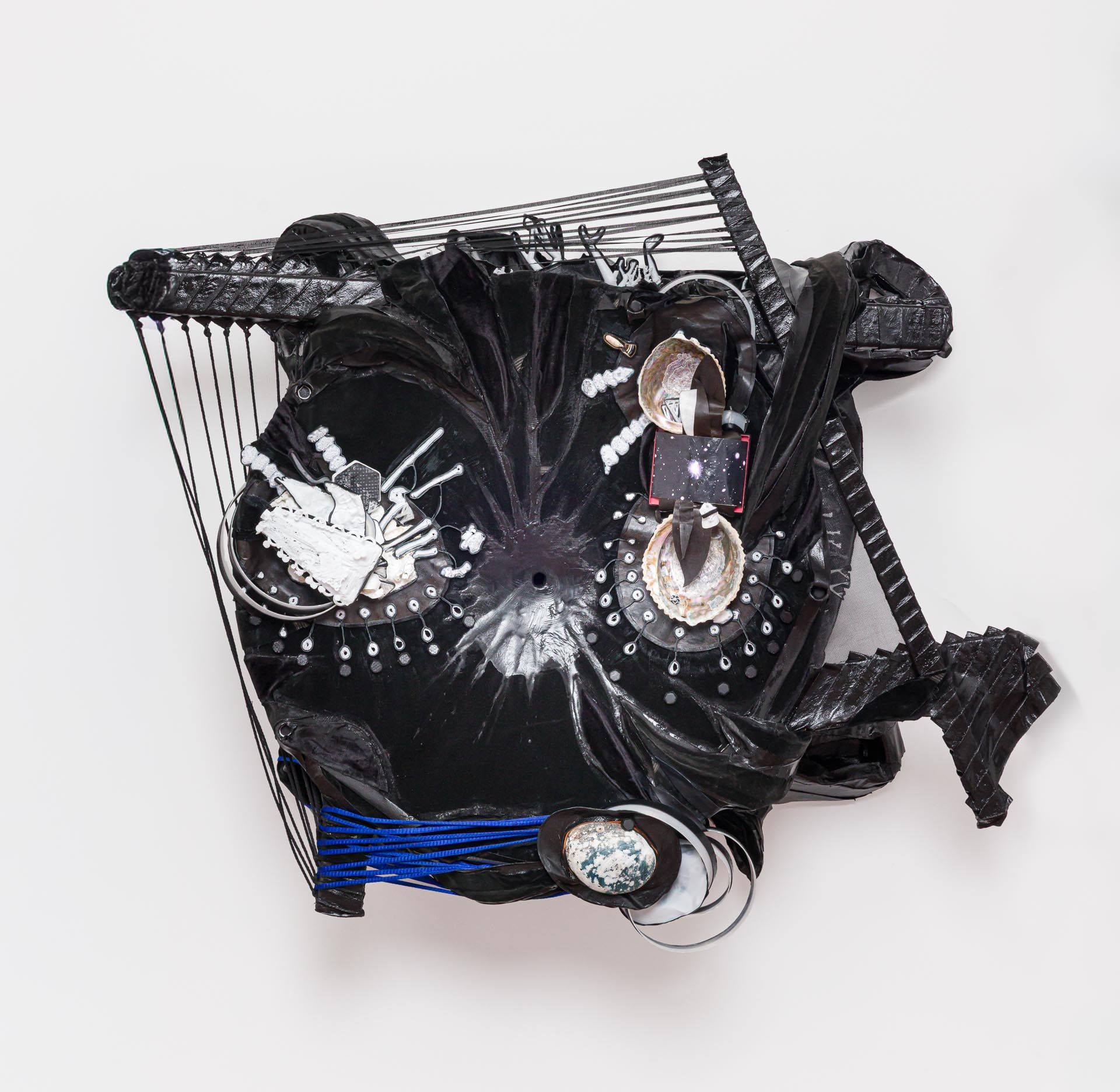
Fractured Continuum. Silent Expansion
Velvet, Vinyl, Recycled leather, Photo on paper, (1982 Astronomy book) Screen, 3-D printed parts, Wood, Metal, Acrylic paint, Resin, Abalone Shell, Tile, Styrofoam.
MORE INFO
46 x 57 x 19 inches
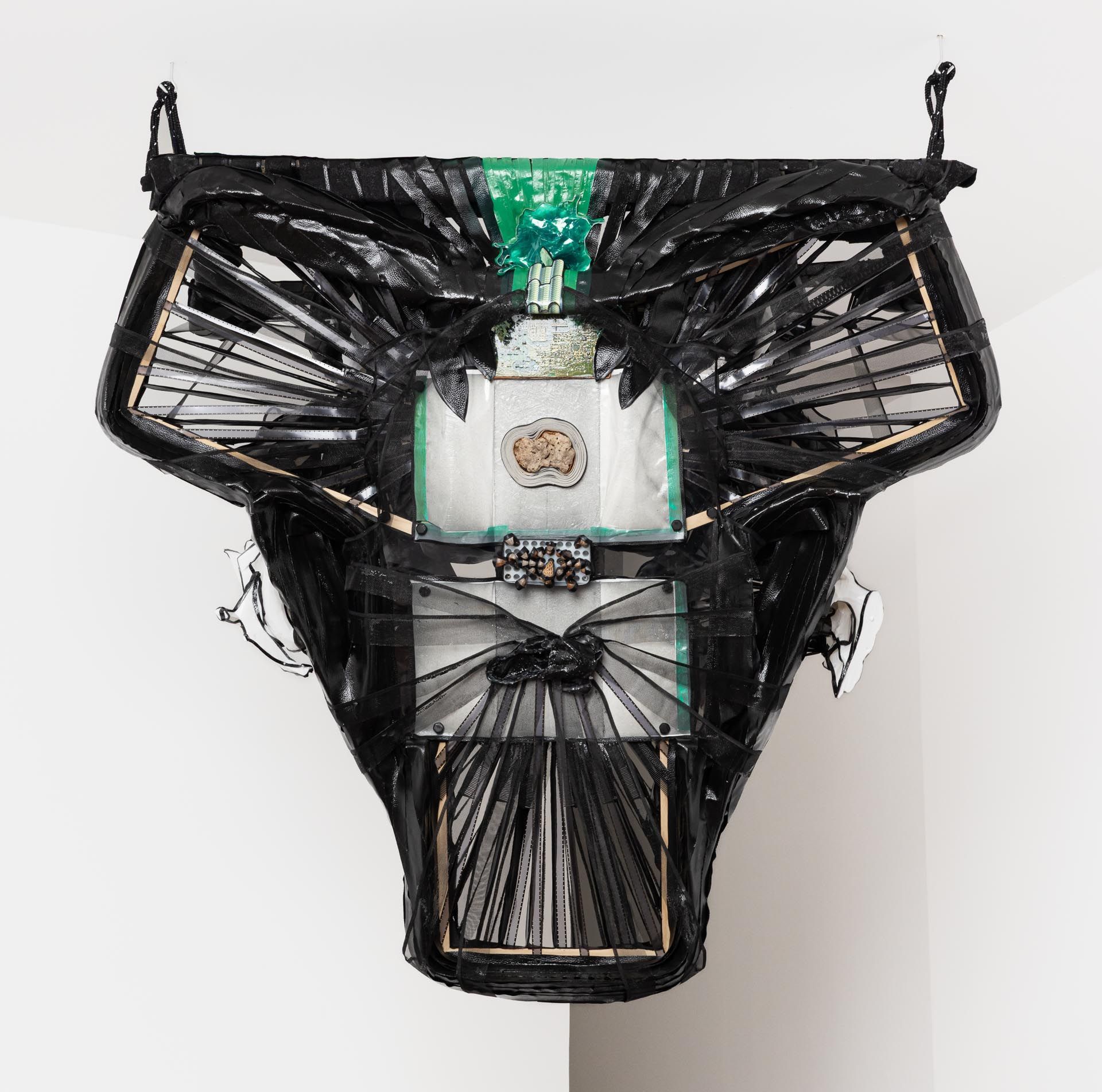
Holding Space. Mass Departing
Vinyl, Recycled leather, Recycled 3-D printed parts, Wood, Metal, Acrylic paint, Photo on paper, (Octavia Butler) Photo on canvas (Vera Stanley Adler) Sea sponge, Resin, Deconstructed Pinecone in ammo box, Computer parts, Film strips.
MORE INFO
48 x 57 x 33 inches
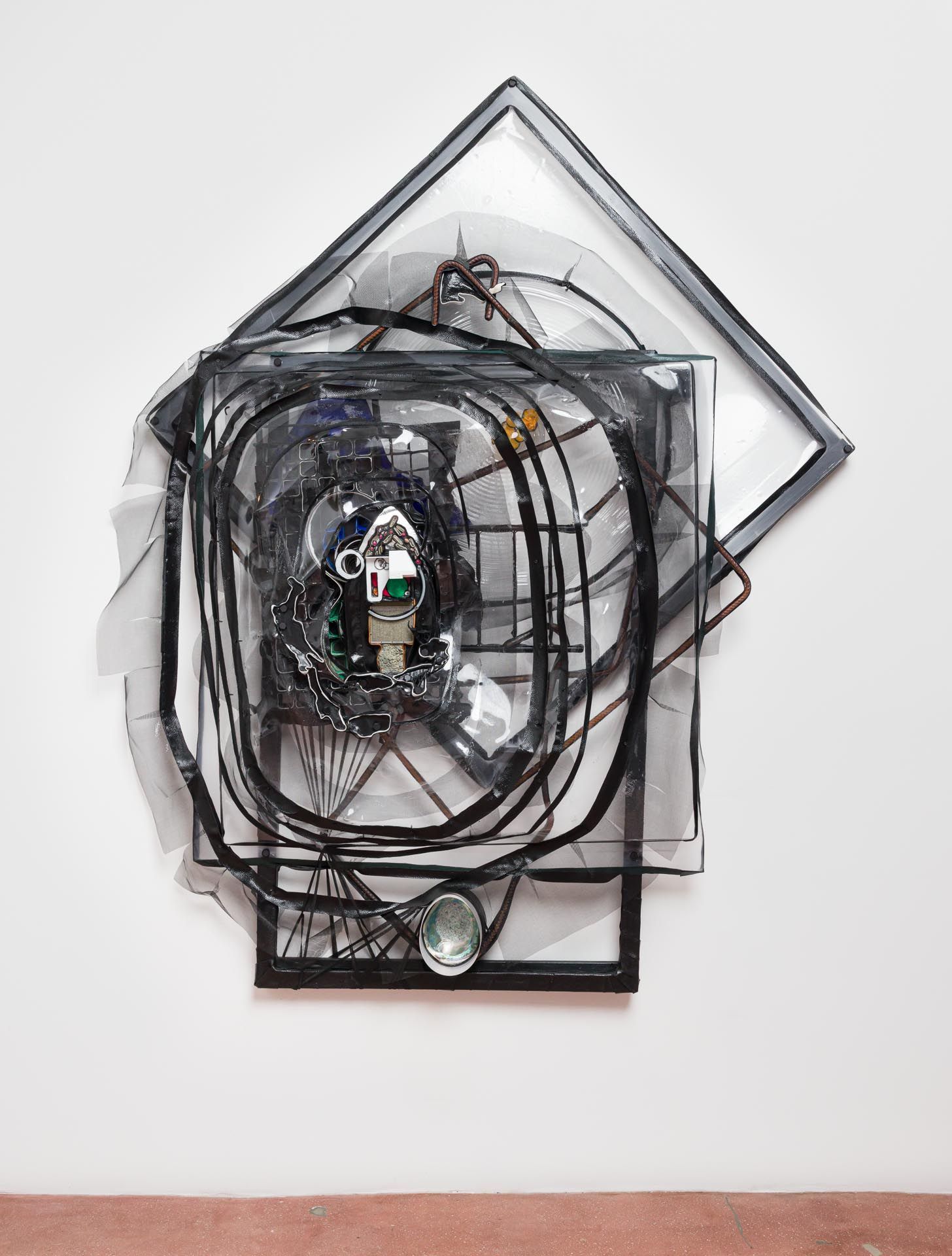
Inherited Momentum. Ongoing Ascent
Vinyl, Recycled leather, Photo on paper, (Octavia Butler)Magnifying glass, Screen, 3-D printed parts, Wood, Metal, Acrylic paint, Resin, Abalone shell, Tile, Clock spring, Quartz, Paper, Breads, Plastic, Rebar, Mirror.
MORE INFO
86 x 67 x 10 inches
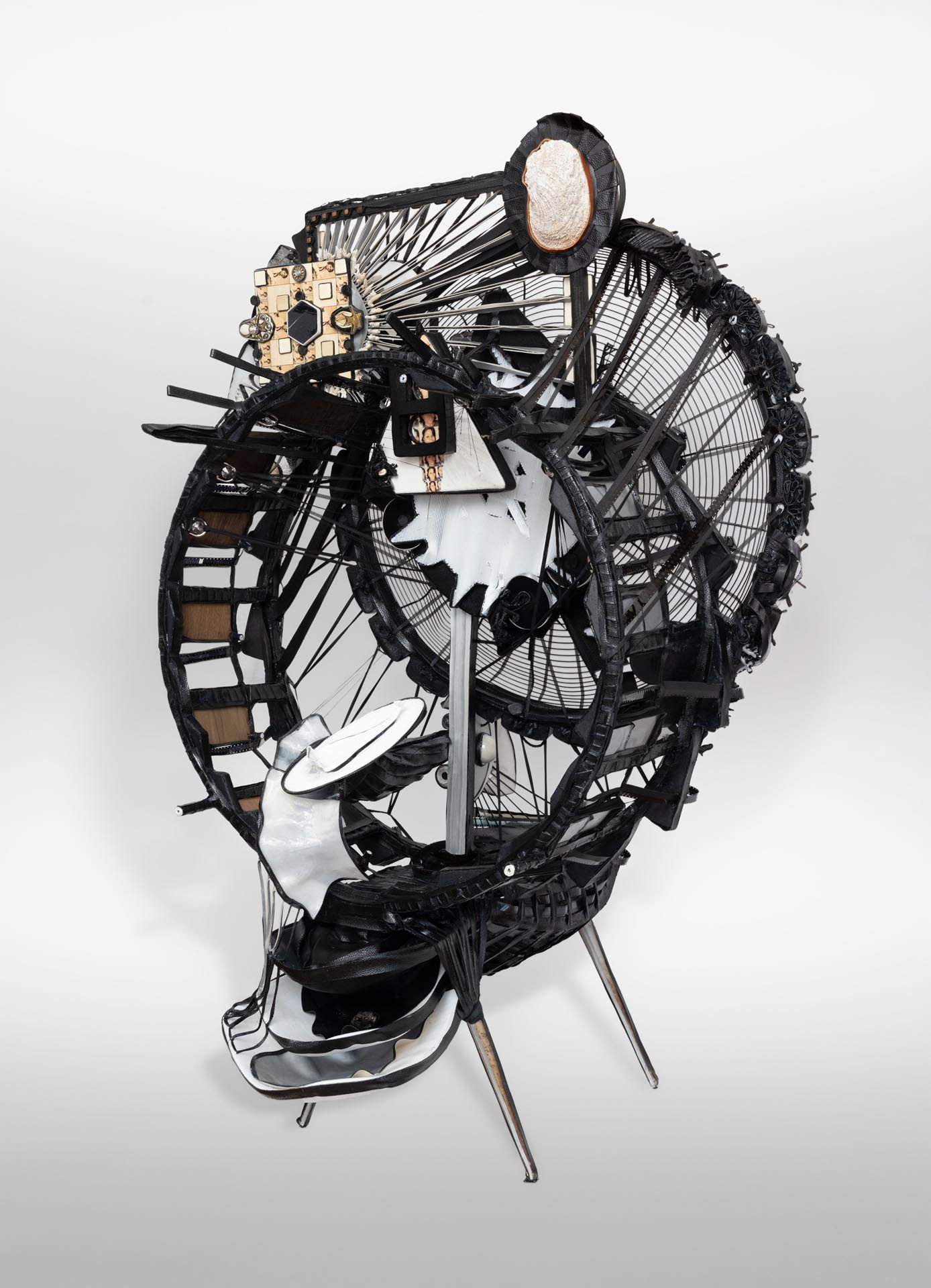
Paused Transit. Rerouting Trajectories
Vinyl, Recycled leather, Recycled 3-D printed parts, Wood, Metal, Acrylic paint, Bullet casing, Cowrie shell, Printed wood, (Edmonia Lewis) Printed canvas, (Breonna Taylor and George Washington Carver) Glass, Abalone, Shell, Tile, Black smoky quartz.
MORE INFO
68 x 45 x 43 inches
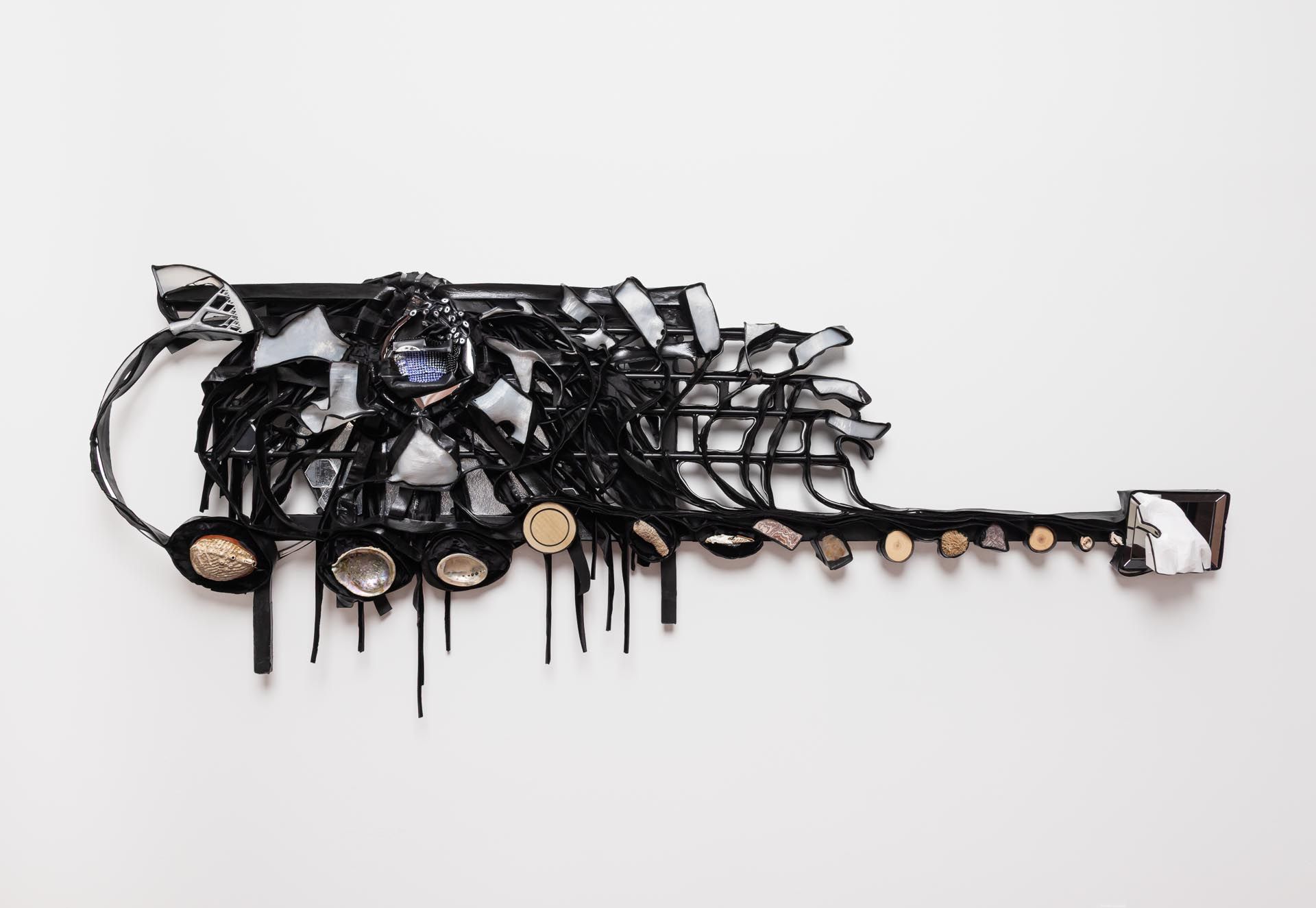
Synthetic Horizon. Fossil Future
Velvet, Vinyl, Recycled leather, Photo on paper, (Deceased human Al & 1982 Astronomy book) Screen, 3-D printed parts, Magnifying glass, Wood, Metal, Acrylic paint, Resin, Abalone shell, Sea sponge, Jasper, Coral, Mirror, Tile.
MORE INFO
45 x 111 x 10.75 inches
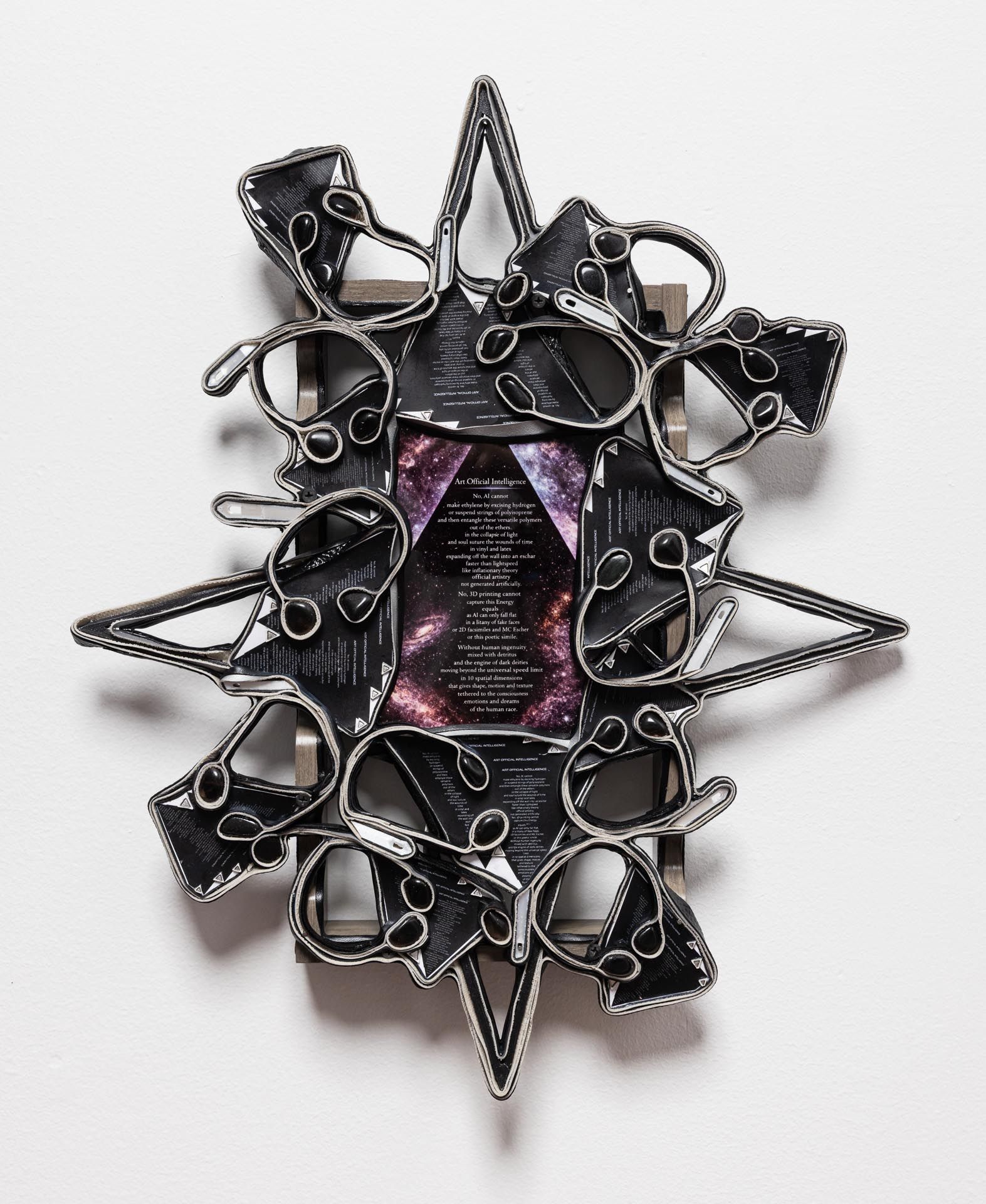
Art Official Intelligence. (Poem 2)
(Poem By Felipe Findley) Vinyl, Recycled leather, Recycled 3-D print parts, Wood, HD metal print, Acrylic pain, Photo on archival matte fine art paper, Smoky quartz.
MORE INFO
23.5 x 19.75 x 2.25 inches
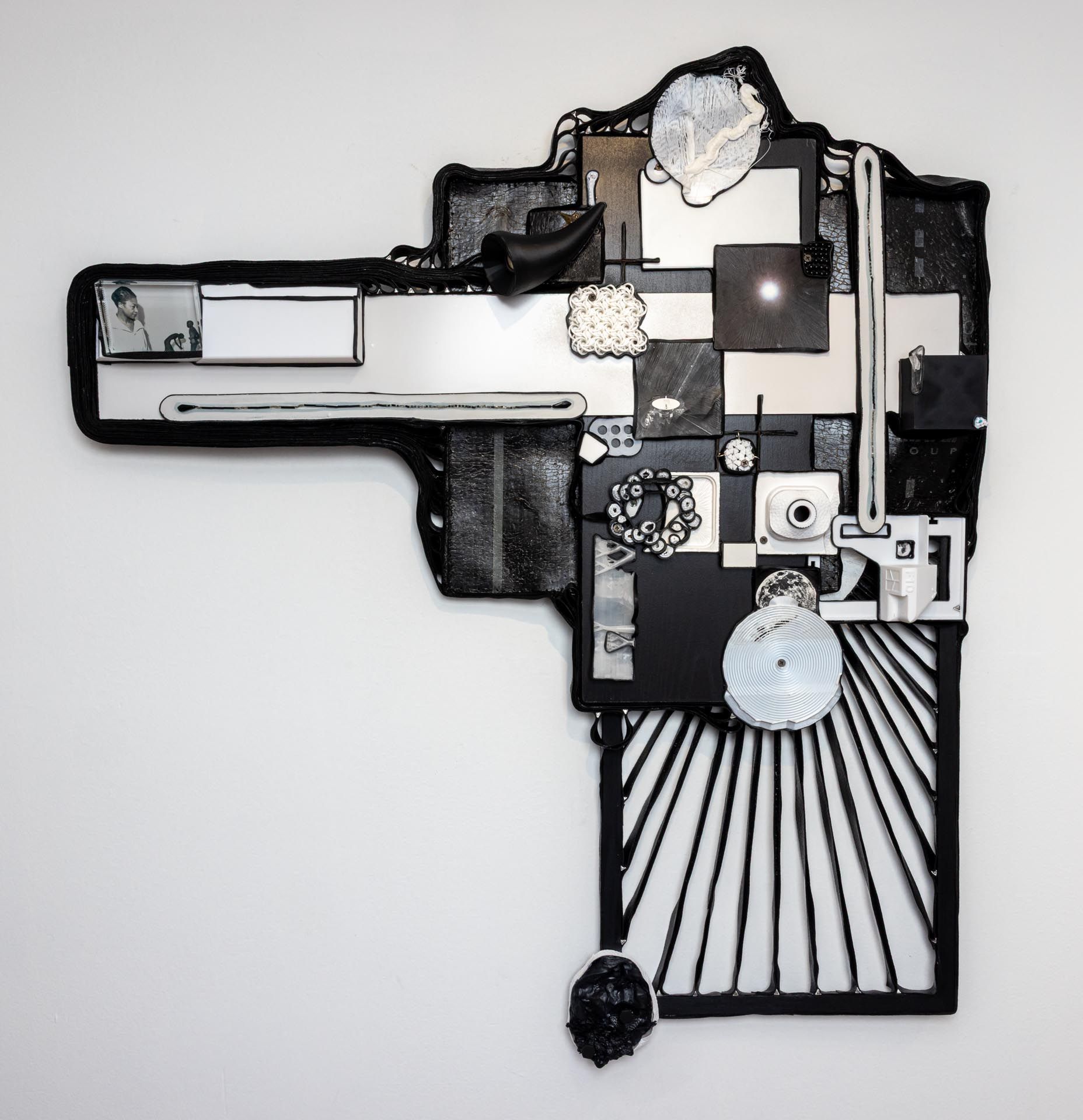
Field of Vision. Radiant Matter
Recycled leather, Vinyl, Crystal, Plastic, Thread, Metal, Acrylic paint, Shell, 3-D printed parts, Quartz crystal, Wood, Paper, Recycled construction materials, Photo in glass from left to right (Augusta Savage, Edmonia Lewis and Octavia Butler) Photo on paper (1982 Astronomy book)
MORE INFO
43 x 38 x 5 inches
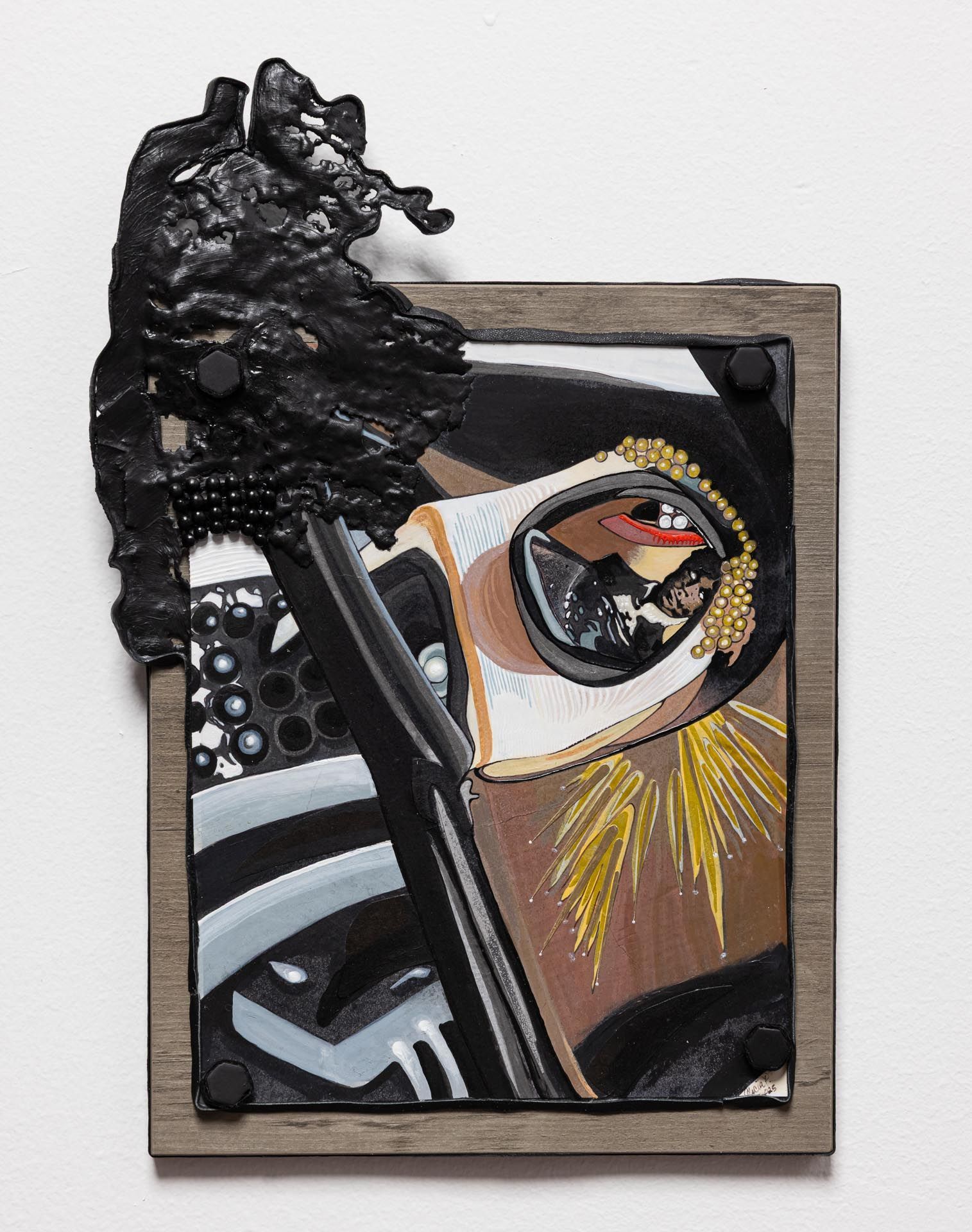
Liberty and Divides (2D Detail of Constellation of Liberty. Still Orbiting The Divide)
Recycled leather, Acrylic paint, Wood, Tile, Metal, Resin, Foil paper.
MORE INFO
15.75 x 10.75 x .75 inches
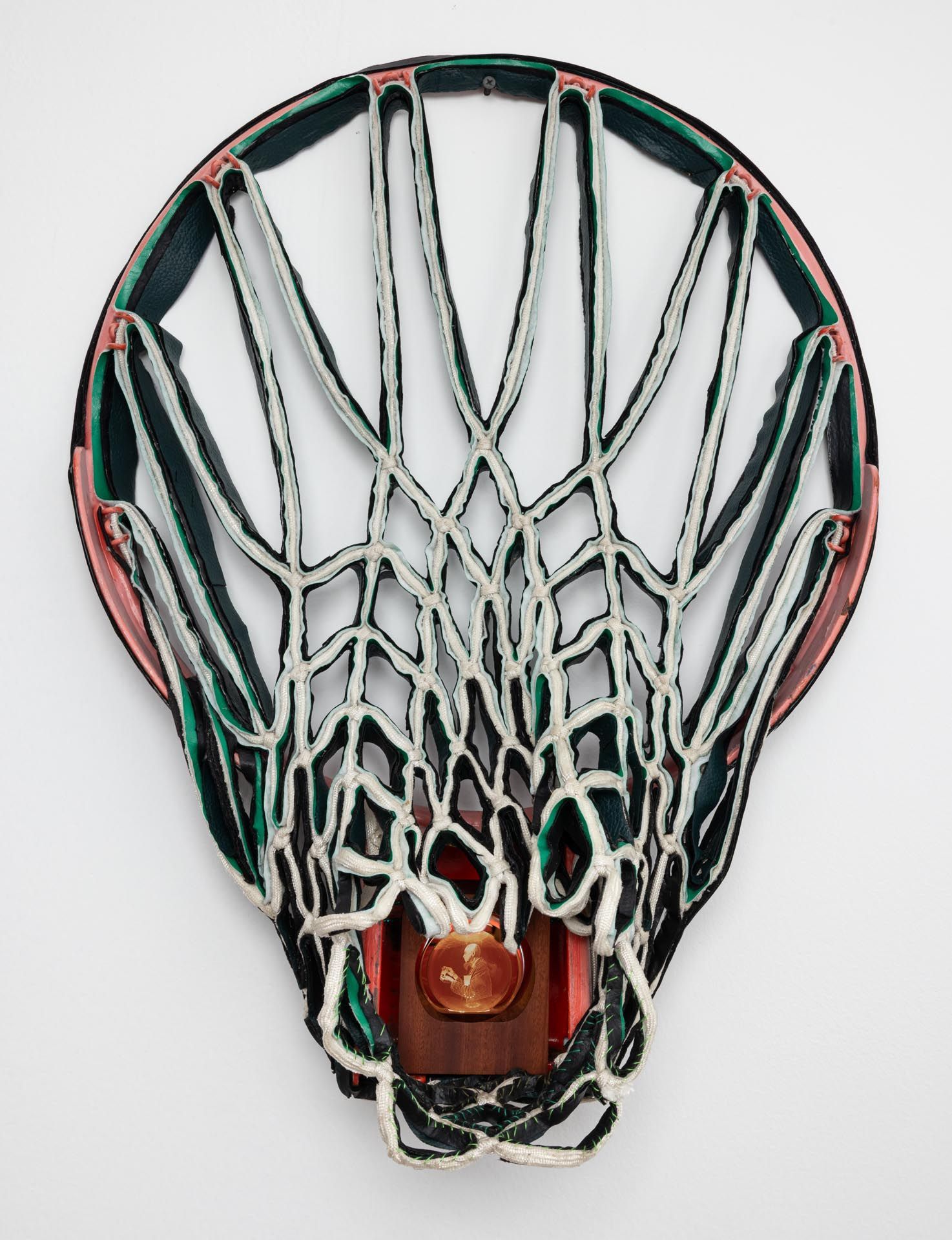
Gravitational Frame
Metal basketball hoop, Vinyl, Wood, Glass, (Image: George Washington Carve) LED lights.
MORE INFO
26 x 19.5 x 6 inches
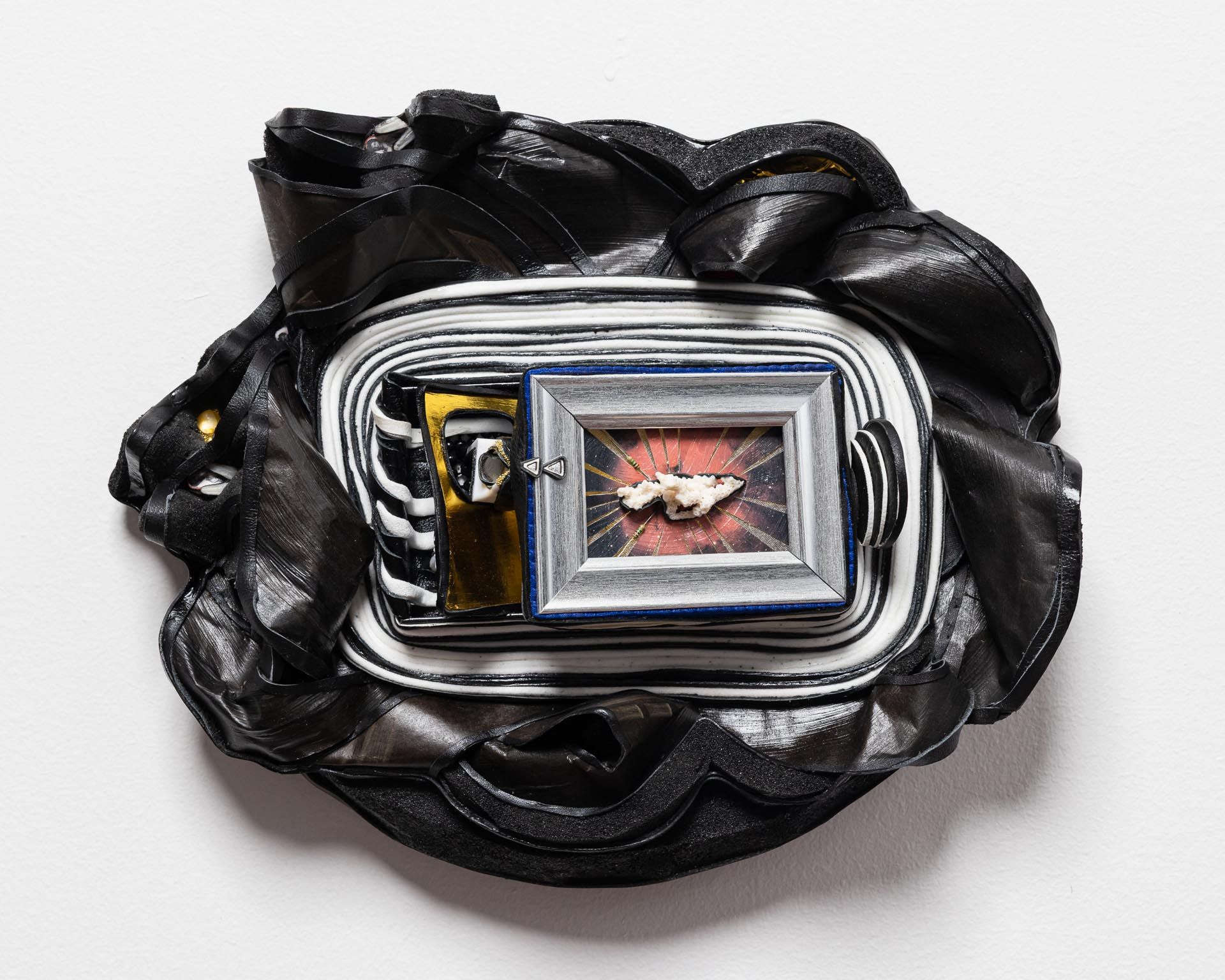
Constellation of Liberty. Still Orbiting the Divide
Recycled leather, Vinyl, Tar paper, Coral, Electrical parts, 3-D printed parts, Fabric trim, Photo (Dred Scott), Metal, Wood, Rubber, Foam, Mirror, Glass.
MORE INFO
13 x 16 x 3.75 inches
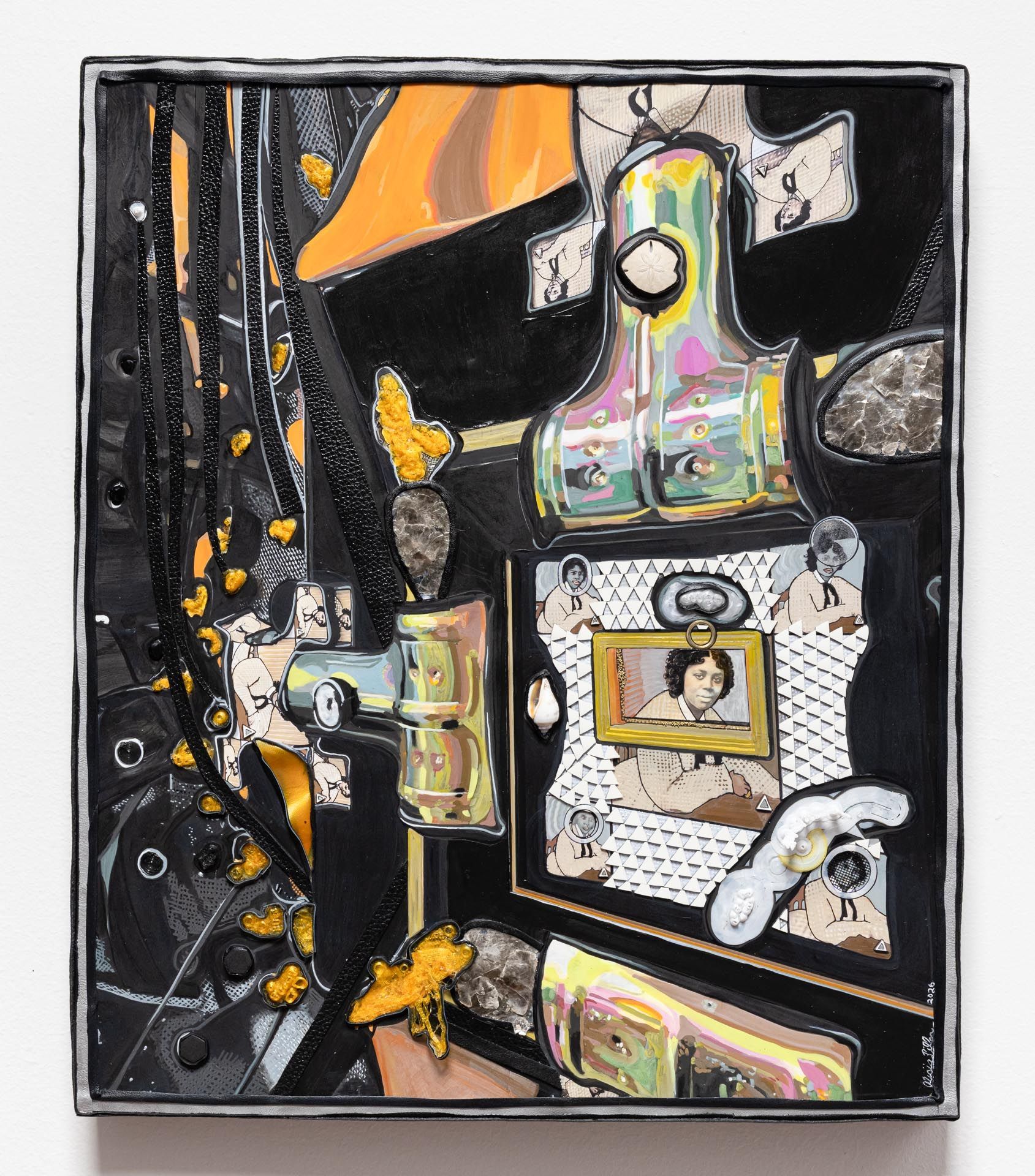
Eternal Frequency. Edmonia Lewis. (2D Detail of Celestial Monument. Eternal Frequency)
Vinyl,Recycled leather, Recycled 3-D printed parts, Wood, Mica, Acrylic paint, Pen and Ink, Photo on paper, (Edmonia Lewis) Shell, Sand dollar, Archival matte fine art paper.
MORE INFO
24.25 x 20.25 x 1.75 inches